I know personally that it can feel a bit awkward to give or receive compliments, the protocol on when to compliment someone and how to react is a bit confusing to me. But I also like to imagine a society in which complimenting people was a more normal thing to do; where being open about how we feel (including our positive feelings towards others – complimenting them) was encouraged and normalised. However much of the time when we do compliment people it is appearance based. This is difficult because it can sometimes reduce someone to their appearance, which they don’t always have control over, and looks past who they are as a person and what they mean in our lives – especially when it’s to do with their body and not the way they dress (something they may use as a form of expression) for example. So I’ve put together a list of 50 compliments and open statements that are not appearance based. My challenge to you is to compliment at least one person a day for the next week on something other than their appearance. Let me know how it goes and any other ideas for compliments in the comments below!
You make me smile
You’re funny
You make me happy
You’re kind
You make me feel safe
You glow
Your sensitivity is so strong
I appreciate you
You inspire me
You’re so strong
I admire your work ethic
You mean a lot to me
I love your honesty
You have a great mindset
You’re so brave
You’re so loving
You’re are worthy
I am comfortable around you
You did great today
You are a warm person
You’re so understanding
You are a good listener
You are really insightful
You always care
You’re wonderfully unique
You are perfect exactly as you are
I wish more people were like you
I respect you
I trust you
I’m so happy you’re in my life
You’ve flourished as a person
You make a difference
You’re becoming even more amazing – and I didn’t think that was possible
How often do you take time to stop and appreciate life? Even when it feels like everything’s going wrong? It’s not a test, I just want to encourage you to honestly consider how often you purposefully notice the good in the world. How often do you pause? You might be the kind of person that never does this, or the kind that laughs it off as some more mindfulness nonsense (I know that word can get on my nerves sometimes). Or maybe you try but it’s too difficult, or you feel like you aren’t present enough, aren’t appreciating things enough, so you might as well not try because you’re not getting it right. Maybe sometimes you do this a lot and other times not at all.
Personally I make a list at the end of every single day with things I’m grateful for. And some days I really deeply feel that gratitude – somewhere indescribable in my core. And other days I’m more like going through the motions. But I make this list every day, and I have for the last 617 days – since I started addiction recovery. I guess that’s kind of been helpful for motivating me to continue with the gratitude practice because I do kind of see it as a life or death thing personally – I either do the things that keep me sober or my life takes a serious turn for the worse. However, that’s not the only reason I do it; I’ve genuinely come to love what practising gratitude in specific (such a small thing) does in my everyday life. And looking back on my mental health journey I’ve realised it became an instinct for me to practise gratitude very early on – though I didn’t realise that’s what I was doing. And that’s interesting.
When I started to recover from my first full-blown, 9 months long, very-not-good depressive episode, I started this little practice for myself. Every day I recorded: 3 good things I noticed in the world that day, 2 good things I did that day, and 1 good thing someone else did for me that day. They could be as small as I ate some food, or got out of bed (which are not always small feats at all), or someone said hello back, the colours of the leaves are changing on the trees etc. Sometimes they were much bigger than that of course, but actually the best emotional rewards came out of finding those tiny little things to list every day, especially on the days it felt like there wasn’t anything good in the world. I realise now I had created for myself a sort of gratitude practice.
This came about because at one of my very lowest points, in a desperate attempt to help myself (I was essentially in a headspace of ‘this has got to work or there is no hope left’) I came up with the idea to write two lists. First I wrote a list of all the good things in the world – with the caveat that I didn’t have to think they were good at the time – because nothing seemed good at the time – I just had to have thought they were good/ fun/ not utterly miserable at some point in time. The second list was all the things I would never get to do if I wasn’t around anymore. And something incredible happened while I was writing those lists. Half way through writing the first list I started to realise I wasn’t just remembering things that used to feel good, I was actually starting to feel a faint sense of happiness about these things in the present. Half way through writing the second list I realised I wasn’t listing things I would never get to do, I was listing things I wanted to do in the future. I could actually, faintly, see a future and feel joy.
It’s interesting to me looking back for several reasons:
My natural instinct when searching for something to help me was to practise gratitude
Practising gratitude had an immediate effect
Despite not wanting to do many things, I wanted to continue to practise gratitude
Practising gratitude consistently actually started to change my perspectives on the world and allowed me to be able to take a step back when things got tough again. It essentially created and trained a little voice in my head that no matter how bad things got was there whispering that it would be ok, that not everything was awful
My instincts for survival and healing are fascinating to me because as someone who slipped through cracks of the mental health system, I find them a practically spiritual thing that came to me in depths of hurt. Of course that might not be the way you look at it, and gratitude has been proven in multiple studies to be a powerful tool, but for me the fact that I automatically reached for gratitude suggests that there must be powerful forces of ‘good’ and love in the universe.
Fast forward a few years and I found myself in addiction recovery, where practising gratitude daily is a foundation of healing. That’s where I realised that what I had done those years before in creating those lists was practising gratitude. So I started doing it again, listing things I am grateful for every day, and in fact sharing them with others – another very healing exercise. Being grateful doesn’t mean we ignore the hurt and wrongdoing in the world, nor does it mean we have to settle for the way our lives are currently. But it does allow us a stable basis to build from; a calm to return to. And it really increases how wonderful the bright things in life feel!
From a scientific standpoint gratitude has been proven to yield many benefits. Here are just five:
It improves empathy and reduces aggression
It helps improve sleep
It boosts self confidence
It strengthens relationships with family, friends, and romantic partners
It aids the immune system
Personally it grounds me, makes me feel connected to the wider world, helps me feel more peaceful and content, and takes me out of my thoughts.
I encourage everyone to try practising gratitude daily for a few weeks, and see how it affects you. If a few weeks seems like too much, then just start with today. The very simple way to practise gratitude is to simply ask yourself the question: What am I grateful for? Allow any thoughts, images and feelings to arise, and try not to judge them. It might help to take a deep breath and sit somewhere quiet – or it might help to have something to entertain your hands like a fidget toy, depending on how your brain works (it’s stuff that gets said a lot, I know, but it is actually helpful).
Here are some questions to ask and ways to record your gratitude practice:
You could try writing out a list of 10 things you’re grateful for; that’s what I do most often
You could do a mind map
Illustrate some things you’re grateful for
Make a moodboard on pinterest or from magazine clippings
Ask, what is a kind thing someone else has done for me today? What are the kindest things people have ever done for me?
What brings me joy? What used to bring me joy as a child?
What makes me smile?
What are the three most important items to me?
Who are influential people in my life?
The possibilities are limitless
I really hope you enjoyed reading this blog and that you give some gratitude practice a go! Best thing is it’s not a new skill, it’s something you’ve likely felt many times throughout your life – all we’re doing is tapping into an emotional tool with intentionality. Let me know your experiences in the comments below!
You may or may not know this about me already, but aside from being a mental health advocate, I am also a very creative person. My biggest passion in life is theatre, and I adore all forms of creativity from writing poetry to banging pots and pans together to make a beat. I think that my passion for advocacy and my creativity go perfectly hand in hand, as does creativity and mental health recovery. So I thought today I’d try something a little different and post one of my poems that relates to my mental health journey. I only write poetry when I’m feeling an emotion intensely – whatever that may be. I find it the perfect form of writing for expressing deep and complex emotions or experiences. So here’s a little piece of my journey that I wrote about a year ago; a look into my heart. I hope you like it, please do let me know in the comments. Sending love and support to you all today!
22:47 – Letters to Friends
I have mismatched smiles
And unsettled expressions
I have tears that come unwarranted
-for most-
But perfectly
For me,
Though sometimes I may pretend they don’t
Till even I forget my tears are full of worth,
And most dangerous of masks
Are the ones we do not realise we wear.
So when your breath catches
Just above the safe tide mark,
When your ears hear the words
They want
So your mind can steal you
For your fears,
When everything is right, balanced in unbalanced juxtaposition, when it is perfect,
And so then it is wrong,
And when all you yearn for is to rest,
But all you can do is run,
How then do you tell them you are grateful?
How do you show
When you can’t feel,
And words will do no justice, of course they won’t, because the crooked smiles and the disorganised tone of voice will give away the
Fear?
Is it fear?
Or is it acceptance? That you are not, and cannot, but you belong in the silence between them.
I’ve made a previous post on reasons to stay alive, which you can read here, but I wanted to create another list of good things in the world. It’s like a list of reasons to live, but also a list of reasons to be grateful (a very important practice in my life), and a list of reminders to see the little good things in life when things get rough or stressful. Use this list to find a moment of pause in your day to connect with some peace, and let yourself connect with the goodness in this world. There’s a lot of issues and sadness, and we can’t ignore that, but sometimes we do need a moment to escape the pressure.
Potatoes – they can be cooked in so many different ways!
The smell of the air after it’s rained
Crunchy leaves
Handwritten letters
Listening to the sound of the sea in seashells
Chameleons – they literally change colour, that’s insane!
The amazing activists and advocates trying to create a better world for us full of hope
The internet. It’s really quite incredible if you stop to think about it
Video calls allowing us to see each other and connect from afar
Really soft fluffy blankets
All the different kinds of music and how all of us can find different pieces beautiful
Board games
Deck of cards – how many different games and tricks you can do, and how they’re unlikely to ever be in the same order!
Snow under your feet
Sledding down a hill
Laughing until your belly hurts
Hats.
The northern lights – they’re like magic!
How many different languages exist
The top of ice cream before anyone takes a scoop
Really cold water on a hot day
A cat’s purring
Bluetooth
The smell of old books
The smell of new books
The smell of freshly mown grass
The smell of freshly baked bread
Pretty sparklers and fairy lights
The Fibonacci sequence
Those random acts of kindness from a stranger that brighten a day – like letting you go first in line, offering a tissue, holding a door
Dogs little paws and toe beans
Bubbles
How many different flowers there are!
The miracle of ecosystems in nature
The feeling of floating in the sea
Building sandcastles
Clouds at sunset when the light illuminates them
Hugs
The amazing scientific advancements being made every day
Shooting stars
Book clubs (or any kind of community club, it’s so lovely to get together over a shared love and interest)
Amateur dramatic theatre – it’s totally about doing what you love together, no other reason!
Magnets (just so fun to play with and the science is actually very cool)
Charity shops and thrift stores
People sharing their knowledge and encouragement on the internet
Pillow fights
Water fights (why stop doing the things you loved as a kid just because you’ve gotten older)
Electricity
Beautiful trees
Daisies close up at night like they’re going to sleep
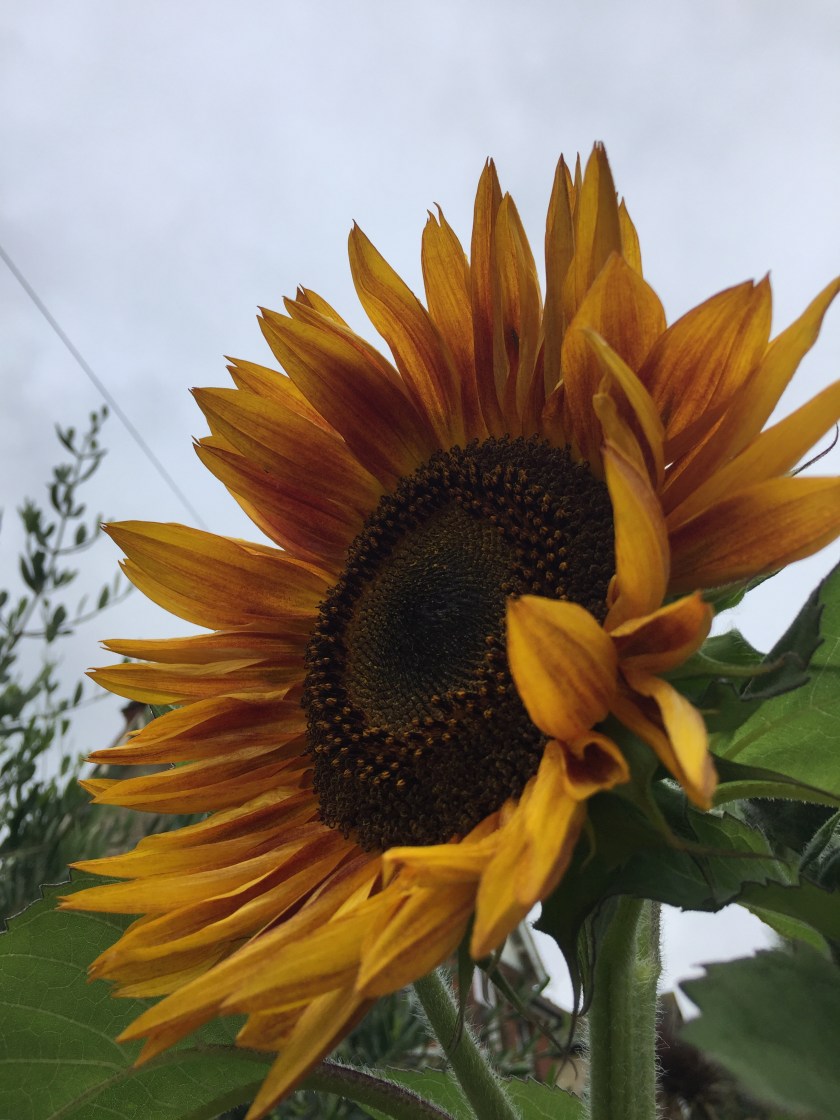
Sunflowers turn to face the sun
The colours of leaves changing in autumn
Teddy bears
The infinity of imagination
Community gardens
People being brave enough to live their truth and share their stories every day even though it may be dangerous or stigmatised
Libraries (they offer the gift of reading to so many more people)
The word ‘serendipity’
Public transport linking us easier
Funky hair dyes (and the amazing things people do with them)
Fidget toys and logic puzzles
Hilarious movies we can bond over and laugh at
Free education (hopefully one day equal and free education will be available to all)
Poetry that reflects our own experiences and feelings
Funny animal videos
Free guided meditation videos
Peer support groups
Smiles
So much art and creativity in so many different forms that connects us, reflects and shapes culture, and inspires
Calculators you can type rude words on
AAC communication devices allowing nonverbal people to communicate easier
Medical and emotional assistance animals
Hot chocolate (or your other favourite warm drink)
Colour changing lights, they are so cool
Written letters
Messages of kindness from strangers posted online or scrawled in public everyday
Blue tac
Glasses and hearing aids – imagine what it was like before we had them!
Apps for so many different things, making knowledge and the world more accessible for many
Woodland walks
Friendships
Love is all around us in so many different forms
Dad jokes
People donate blood to save others every day
Audiobooks making reading more accessible
Picnics
Pizza – circle shape, in a square box, cut into triangles
Alcohol-free alternatives
Fluffy socks
Showing gratitude
Bird song in the morning
Finding a penny on the ground
Running through sprinklers
Feeling of popping bubble wrap
Hearing a song you used to love and had forgotten about \
Seeing an old friend for the first time in a while and picking up like you only saw them yesterday
When you have a really cool dream and you can remember it when you wake up
Eating breakfast food at night or dinner food in the morning
That cosy feeling when it’s rainy outside but you’re warm inside
I struggle with the idea of New Year’s resolutions. After all, New Year’s Day is simply just another day. The sun will continue to rise and there will always be new tomorrows; new opportunities for change and growth – in fact it happens every day. However I do realise that years are markers of points in our lives and our developments, so I wanted to share some hopes and aims for this space in the coming year and beyond! In the interest of transparency, I don’t have a clear plan on how to achieve everything on this list. But I’m working on it. Just like I’m working on learning more and listening to more voices on mental health and its intersections every day. My hopes will change, my perspectives will change. And I am so glad to have all of you along for the ride.
Thank you all so much for your support of this space and mental health advocacy in 2022.
If you would like to be more directly involved with Our Happy Notes – whether on the blog, instagram, or something else! – please do reach out. I would love to hear from you! You can fill out the contact form on this website or email ourhappynotes@gmail.com
So without further ado, here are the hopes for Our Happy Notes in 2023:
1. More tangible actions
2. More pressures on governments and organisations
3. Consistent blog posting
4. Regularly get back to how it started – distributing happy notes!
Today’s post is a guest post written by Eya, a follower of Our Happy Notes on Instagram (their username: @the_dangerous_me). It was edited by Millie Bevan, founder of Our Happy Notes. If you would like to collaborate please email ourhappynotes@gmail.com or fill out the contact form on the website.
Anxiety can be a very physical experience where you can’t understand what’s happening to your body. It’s hard to rationalise; it feels like your hormones have gone into overdrive. And really they have – being afraid or nervous is your body and brain’s way of telling you that there is danger nearby, so you may think at first that the feeling will pass, but anxiety means your brain sees danger everywhere. It doesn’t pass so easily.
Anxiety is a silent killer. It kills your soul, it cuts you to pieces. Consider yourself as a game to anxiety because it makes you feel like a doll which it plays with. You can’t sleep at night and you constantly question what the people around you might be thinking, getting stuck in a loop with these thoughts going round and round in your head, replaying everything you’ve said and done. I have experienced anxiety since I was 13 years old when I started to lose sleep andi cried at night and i suffered. I felt so alone and it was a dark time in my life. I lost friends, became isolated, and soon started to experience depression as well. But there is hope. I went to a therapist and day by day I felt better. Anxiety is not a topic to be taken lightly. It can make life so difficult. But you are not alone and you can look after your mental health. Eventually, with patience, it gets better.
There’s a lot of love out there and people that care. You can learn to love yourself again; know that there’s nothing that could stop you from your dreams and achievements. Nowadays I feel so much better, so I want to pass that hope onto you so you can enjoy everyday for yourself.
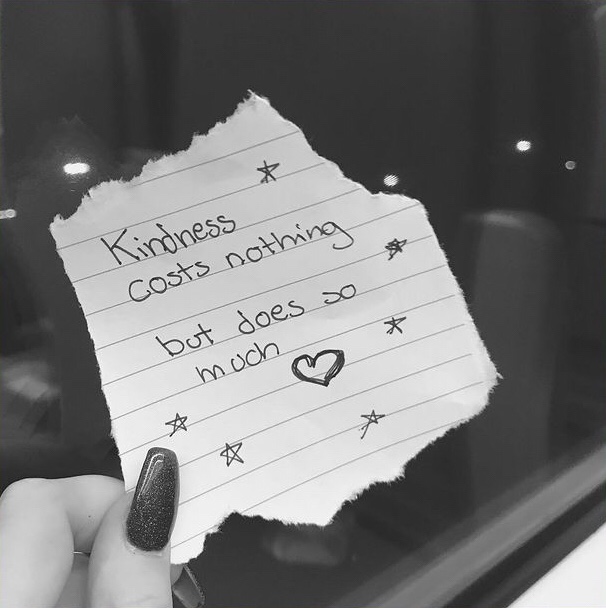
Kindness is something intangible, and yet it is very real and very powerful. In the Cambridge dictionary kindness is defined as ‘the quality of being generous, helpful, and caring about other people, or an act showing this quality’. If we think back on our lives I’m sure we can think on many moments where people have shown us kindness. Sometimes a seemingly small or insignificant act of kindness can have the greatest impact – for example someone helping someone else carry a bag on a particularly bad day could remind them that there is good in the world and prevent them from spiralling into a worse place mentally. And sometimes it’s the grand gestures of kindness over a long period of time that make an impact on us – for me the fact that my friends never gave up on me during the dark times is one the greatest acts of kindness that I have ever experienced. The point is, what we qualify as a kind act may be vary for each of us, but the underlying caring and generosity always helps to brighten up the world and our lives.
Back in November I posted on my Instagram about a 30 day random acts of kindness challenge. The idea behind it was to inspire myself and others to think about doing something small but kind once a day in order to be more mindful about how we can make a positive impact on the people and world around us. Why? I believe that when we put good energy out there, it spreads – a bit of a butterfly effect if you will – and it goes beyond the original act of kindness. Also, as someone who struggles with their mental health I know that being kind can have a profound effect on how I feel; it makes me feel better about myself and also helps to get me out of the cycle of my thoughts. But don’t forget you can also show yourself kindness, in many forms, and that is just as important. It helps us to be able to function better and feel better and do even more for others.
So here’s a list of 31 random acts of kindness. I would encourage you to try one out, or make it a challenge to do one a day for the next 31 days! Please comment below with any more ideas or stories of how someone else has helped you out:
Tell someone you appreciate them
Sign a petition for a cause you care about
Say hello to someone and ask how they are
Donate old clothes to a charity store
Hold the door for someone
Bake or cook something and give it to someone – a neighbour, family member, coworker
Give three honest compliments
Write a happy note and leave it for someone to find/ post it online (use #ourhappynotes)
Comment something positive on a post
Make/ hang some bird feeders
Leave a thank you note for your mail carrier or another civil worker who does a lot for you
Buy some food for a food bank
Smile at someone
When you’re going on an errand, ask a neighbour/ friend if they need you to do anything for them
Share a post about an issue you care about
Write some positive messages on the pavement with chalk
Leave a bit of change in a vending machine
Bring some food to a homeless person
Wear your mask with vigilance if you can – this one should be some every day!
Support a small local business, either with money or by leaving a positive review/ following them online
Spend the day trying to be kind to yourself – listening to what you need, letting your emotions be, relaxing etc
Do a chore that someone else would usually do
Plant something
Have a complaint free day
Send a letter to an elderly person
Read an article to educate yourself on an issue
Encourage someone
Check in on your friends
Write to your MP/ representative about something you feel needs attention
Let someone go ahead of you in line
Brainstorm more ideas for kindness and how you can incorporate it into your everyday life
Let’s spread some sparkly, shiny, generous energy in the world! Sending all my love and support,
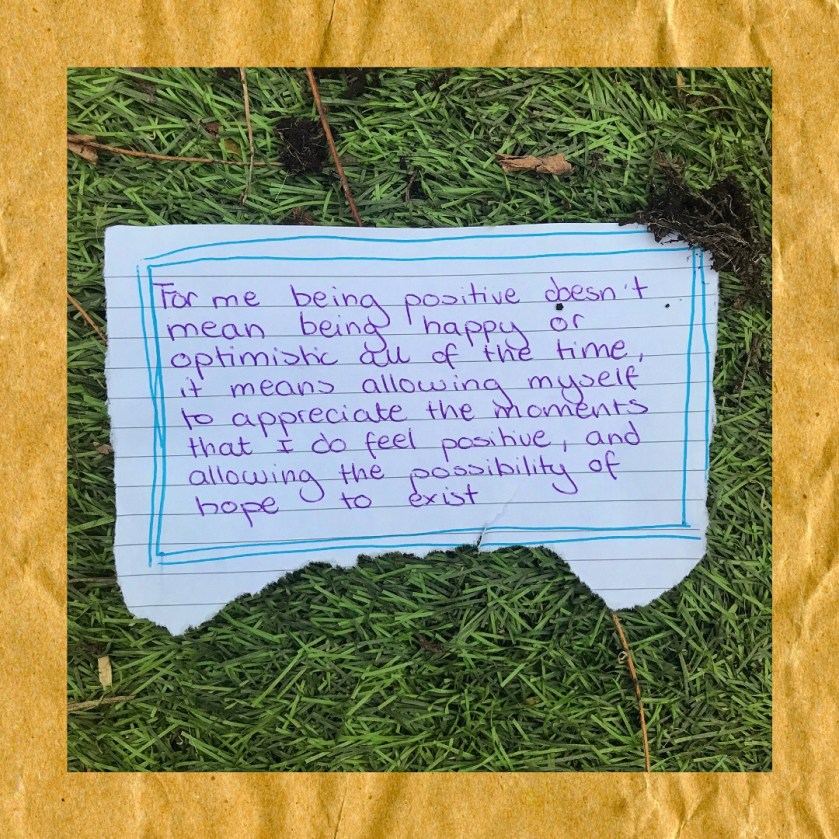
This post is inspired by I note I made for my Instagram – @our.happy.notes – which read: ‘For me being positive doesn’t mean being happy or positive all the time, it means allowing myself to appreciate the moments that I do feel positive, and allowing the possibility of hope to exist’. I wrote it because being the inquisitive person I am and being active on social media brought the thought into my mind – what is positivity? What does positivity mean to me?
I’m a person that tends to find myself living in extremes. There either is or there isn’t. I am all or nothing. So with positivity and a mood disorder, I found that I either lived in a state of overwhelming optimist or complete lack of any positive thought at all. What I have found interesting, and beneficial to my mental health, is exploring the space in between. The idea that even in positive moments I can accept that it won’t last forever, and in the times where I lack such I can acknowledge that it doesn’t mean that positivity has disappeared.
I think sometimes even in well meaning spaces, there can be such a pressure to be positive and see the good in life. Unfortunately this simply isn’t possible all of the time, and when we put pressure on ourselves to feel one way or the other it can lead to us feeling even worse. The reality of the situation is that all emotions on the spectrum are valid. Yet the lack of positivity or hope in one moment does not mean it will never return; that it has ceased to exist. Nowadays this is something I like to remind myself – writing it out helps me to absorb it.
So, what is positivity to me? Positivity is not the blind belief in a bright future, but the acceptance of the fact that a bright future could exist. It is allowing the possibility of a good day for someone else happening, even if it isn’t for me. It is embracing the small, joyful things in life – the most minute parts of the world that make me a little less down, even if only for a moment. It is an intangible thing, an emotion, an idea – a beautiful prospect.
However I recognise that in moments we really can want to increase our positive thoughts and feelings in life. I am no expert on this, though I do have some tools that have helped me. In the morning I write down affirmations for the day – ‘Today can be a good day’, ‘I am enough’, etc. In the evening I write a gratitude list – ‘I have a roof over my head’, ‘someone smiled at me in the street’. I list the small things in life that bring me joy. I allow myself to dream wildly, but remind myself that whether or not these dreams materialise, I will be ok. I smile; sometimes I simply sit there and I smile. And when I feel that positivity is disappearing, that hope is waning, I repeat aloud and write on paper that they are not gone forever. These might seem a little silly, but they are some of the most healing things toward my mental health.
Sending love and support to anyone who needs it today!
Hello Happies! (Apparently that’s what we’re called now, just came up with it – if you have a better idea do share)
This is a basic guide on how – and why – to write your own Happy Note. There is no set formula, except that you must try to spread joy or motivate and encourage through your words, but it might be helpful to have some ideas. First though, here’s 10 reasons why you should write a Happy Note:
1. Your words could really brighten someone’s day. You never know what someone is going through, so a few kind words found from a stranger could really mean something to them.
2. Even if your note doesn’t have a profound impact on someone else, by consciously writing positive words you are training your brain to think positive thoughts; a happy mindset can change your life.
3. It’s super easy and takes less than 5 minutes, so why not?
4. It’s a great activity for kids to come up with something kind and have fun decorating their note, teaching them skills in creativity and kindness.
5. It helps you to feel good about yourself as you are deciding to do something for someone else and the world around you. This in turn encourages you to do more to aid the causes you are interested in.
6. It’s fun; you can be as artistic as you like because you are in control.
7. You can make a Happy Note wherever and whenever you like: on the go, while watching TV, during a break – it’s up to you!
8. A Happy Note allows you to feel connected to like minded people and be kind to someone else without having to deal with any social interaction, which can be really scary for some people.
9. It’s only a small step towards a happier life and a happier world, so you don’t need to be afraid to give it a go and it doesn’t require a lot of effort – go at your own pace in taking the step. You’re doing great just by reading this!
10. Happy Notes are symbolic in bringing about a more joyful world, and by creating one you are starting the process in making this dream a reality.
So, you’ve decided you want to write your own Happy Note? Great! But where to begin? As we’ve said already, there’s no set formula for your happy note, just so long as it’s full of joy, motivation and/or encouragement. Below you’ll find a step-by-step guide to creating your own Happy Note and some templates. Go spread that positivity!
1. Grab a pen and some paper. If you want you can also grab some other things to jazz up your note such as glitter, Pom Pom or coloured pencils.
2. Decide what you want your note to say. Remember to make it positive, motivational, joyful, encouraging or all four! It could be a quote or a family saying. Perhaps you’d like to tell your story to inspire someone else. Whatever it is, make it kind. (We’ve included some of our fave quotes at the end of this post)
3. If you want, add a little message on the back of your note to let the world know what it is so the movement can spread. You can use this template – or come up with your own:
‘Hi amazing person,
I am a happy note; my purpose is to spread joy, motivate and encourage others. I want the world to be a happy positive place so I’m part of a movement called Our Happy Notes. I hope you’re having a great day, but if not I hope I’ve helped to brighten it a little. Remember it’s ok not to be ok. There are people out there that care. If you want to find out more visit @our.happy.notes on Instagram or http://www.ourhappynote.wordpress.com
4. Choose where you’re going to leave your note – will it be on a train? In a book? On a shelf? Or under a coffee cup? Just make sure it’s somewhere that someone will find it, and it won’t get blown away by the wind.
5. So, you’ve written your first Happy Note, but what now? When the time feels right, write another and spread more joy. In the meantime look around you for the small things you can do to make a difference. Be kind to someone by holding open the door; smiling as you pass; helping carry a shopping bag. And don’t be disheartened if that kindness isn’t returned at first – it’s going to take time, but you are doing something great.
While you’re working towards all this joy for other people it’s possible you may have neglected someone very important: yourself. You can be kind to yourself, it’s not wrong – it’s necessary. When you smile the world smiles with you. It’s a slow process but it is possible (more on this soon).
If all this work for change has got you itching to do more, then we encourage you to find an issue you are passionate about and research so you can apply our principal that a small step can make a big difference to said issue. And while we’re on the topic of passion – if you can find something that sets your soul on fire then it’s going to revolutionise your world. Look into what you are curious about and try out something new. If doing something in person is difficult for you, the internet has a huge variety of courses for you to give a go. We promise it won’t be the end of the world if you try something and don’t like it, so you may as well.
‘You only fail when you stop trying’
‘Happiness can be found even in the darkest of times if only one remembers to turn on the light’ ~Albus Dumbledore
‘You are enough’
‘Happiness is letting go of what you think your life is supposed to look like and celebrating it for everything it is’ ~Mandy Hale
‘You cannot find peace by avoiding life’ ~ Virginia Woolf
‘Only in the darkness can you see the stars’ ~ Martin Luther King
We hope you’ve enjoyed this short guide and now feel equipped to go forth and create your first Happy Note. You’re part of a movement now – a joyful movement.
If you make a note please do share it with us on Instagram @our.happy.notes or via email: our.happy.notes@gmail.com.




 Our Happy Notes