Posted in Mental Health, Personal Growth

Letter To A Younger Me

Hey sweetie, 

I’m writing you this letter because you’ve been on my mind a lot lately. And the thing is, I know you won’t actually read it, you can’t, I can’t actually travel back and give it to you. So there’s no real point in me giving you advice; any advice I do write is, I suppose, more of a reminder for me now – born from the gifts you gave me just by keeping going. Yeah, this letter isn’t really for you. It’s for me now, or us now. To heal a little bit and reflect in a way that doesn’t consume us back to where you are. If that makes any sense? 

I want to comfort you. I want to hug you, hold you tight, and whisper ‘I’ve got you’. Which is something to remember when you feel like the worst person ever, because eventually we’re able to look back and show ourselves compassion. I know it hurts. And I know you feel really lonely, I know. 

I think I’m writing this to you at about age 13, maybe just turned 14. Right as all the mental health stuff really took off, and before you’d gone through enough of it to have any perspective on it. It was all new and you had no reason to think it wouldn’t last forever. But, hey, spoiler alert – it doesn’t last forever. I won’t lie to you, it does get worse. And then maybe worse again. And again. But there’s this magic process you haven’t come across yet, where even though in some ways it gets worse, it never feels quite as bad as that very first time. Because you’re growing and learning and after you survive it once you always know, deep down inside of you, that you’re going to survive it again. And you’re going to learn all these little skills – and big skills! – that help you get through. You’re going to be ok. Maybe not always, but you are going to be ok. 

I would say please don’t drink, but if you’re 13/14 it’s already too late for that. So I’ll say this instead: you know how you always knew, from when you were really little, that you didn’t want to drink? And you were adamant that you never would, and you always thought if you did it wouldn’t end well, but you didn’t know why? Well, that was your gut instinct, and it was a good one. Learn to listen to your gut – it very rarely serves you wrong. So I know you’ve already had a drink, and done some other things, and I know it feels really great right now. I also know I can’t change what happened (or is going to happen, from your perspective). So I’ll say enjoy it while you can. Enjoy it while it’s fun and have those memories that we treasure. The world is a confusing place; it’s a paradox and time is a funny thing – things can be both good and bad. But listen, when it gets too much, know there is hope. Know that this isn’t going to be forever, and you are going to be ok again, I promise. I promise you the madness it’s going to cause is not going to rule your whole life. And I promise you that one day you’ll actually be grateful for it, strange as that may seem. 

But that’s a few years away yet anyhow. For now it might be more relevant to say that food isn’t the enemy and that you are allowed to take up space. You are allowed to exist and feel and show that you feel. I know right now a lot of your time is taken up thinking about food, and actually you don’t even think that’s a problem yet. Well, you’ll figure it out. There’s a lot of cycles and waves in this life, and you’re gonna ride every one of them out. And you’re not going to do it alone. 

In a few months you’re going to meet this amazing person – she’s a bit crazy. I’d like to say thank you for trusting your gut instinct that first day you met her; the one that says ‘this person gets me’. She does. She’s going to help you. And that’s also going to unleash a whole load of other sh*t in your head because once you open the floodgates of emotion, it’s hard to close them. But you’re not going to be alone. Lean into the people who help you, even when it feels uncomfortable and you’re ashamed to do it, because one day you’re going to be able to show them it was worth it. You are going to meet like-minded, supportive people, and make true deep friendships. Loneliness isn’t going to go away completely, I doubt it ever does, but slowly you’re going to learn to make connections and redefine what that means for you. It’s a process we’re still going through – and we’ve come to appreciate it’s actually kind of a wonderful thing that learning is lifelong. You never stop growing. 

I want you to know that I forgive you. I forgive you. All the unforgivable things that make you think there’s no point, the whirlwind of self-destructive hate that spirals out to others – I forgive you for all of it. You are doing the best you can. And one day you’re going to be able to do better. And in 5,10,15 years you’ll be able to do better again! So I not only forgive you, but I thank you for trying so damn hard to keep going when it all seems impossible. 

If I could actually give this letter to you, the one thing I would probably most like to say is that you’re autistic. Surprise! You’re going to find out in about two years and it’s going to make a whole lot of sense and it’s going to change your life. It’s going to be a catalyst in helping you to understand yourself and learn to exist in this world. Because you’re not broken, you’re living in a world that wasn’t built for you. So when in a few months the whole world comes crashing in around you and you can’t be the perfect A* student you built your identity around (don’t worry, it’s actually a blessing to get to rebuild your sense of self and be able to do other things), know that you are allowed to express your needs. You are allowed to be tired and burnt out and unable to carry on at that level without support or understanding. You are allowed to take up space – I’ve said it once, I’ll say it again. 

Ok, what else would you like to know? We’re still obsessed with Carrie Fisher. You were right, we do have a developing mood disorder. Also anxiety, a lot of it. Oh! You’re going to act! You’re going to see your dreams becoming reality and it’s going to feel even better after all this hurt because you’ll understand how precious it really is. You’re actually quite funny, and it wouldn’t hurt you to trust that you can lean into your comedy every now and then. You write a lot, including a lot of poetry (we like poetry now). You went around Europe on your own for 2 months at 17, just like we’d always dreamed! You run a mental health space, have been on a podcast, won an award. We’re still gay. So yeah, you’re ok. You’re not perfect, no one is, so it’s ok to stop chasing that idea of perfection. And you don’t need to do crazy, harmful things to gain other people’s approval and affection. Laughter is the key to making it through rough times – you have to be able to find life funny. Oh and also – not everyone can hear colour?? We were 15 by the time we realised that! 

I love you, always, through all of it. You’ve got this, even when it feels like you don’t. And I’ll be waiting right here for you in a few years, 

Love, 

You.
Posted in Advocacy, Mental Health

Psychiatry and LGBTQ+ Rights

Psychiatry has throughout its history and still is very much linked with control and upholding societal standards. The view many people have is that at its core, even though it may be failing, the mental health system exists to help us be happier. And while it’s true there may be individuals in the system who wish this, the very structure is built around an idea of societal norm,  and returning people to acceptable states of being and productivity. Part of that history of western psychiatry has been its link to LGBTQ+ rights – or more specifically the denial of such rights and the pathologisation of the community as mentally ill. So here is a very brief overview of some of that history today. 

But first, why is this important? Well, the history and injustice of psychiatry is really important to understand because the way the system operates now is directly built on this, so we’re still seeing discrimination of all kinds. We can’t just fund a harmful system, we have to review it, build alternatives etc etc. If we do not understand this history we cannot engage in meaningfully informed conversations about what the future of mental health care might look like, because we risk making the same mistakes by perpetuating the system. 

So here’s some fast facts about psychiatry and gay rights:

  1. The World Health Organisation (WHO) didn’t declassify being gay as a mental illness until 1992. 
  2. They didn’t declassify being transgender as a mental illness until 2019.
  3. Between 1935 – 74 chemical and electrical experiments were done on gay men in psychiatric hospitals to try to change their sexuality in a process known as ‘aversion therapy’. Some men were made to do this to avoid going to jail for engaging in homosexual activity. Conversion therapy is still a practice in many places today, an ongoing demonstration of this abuse and trauma inflicted upon LGBTQ people.
  4. Being gay was also criminalised, as well as being classed as a mental illness, until 1973. This is a clear example of the direct link between psychiatry and criminalization. Under these laws over 100,000 men were convicted in the 20th century. One such example is Alan Turing who was forced to endure hormone ‘therapy’ to ‘cure’ him, or go to jail. He chose the former and was chemically castrated – as were many other men. It was not until 2017 that the UK offered pardons to the thousands of gay men convicted of abolished sexual offences, simply because of their sexuality. 
  5. Gender dysphoria and incongruence (for example) are still used to pathologise being trans – meaning they are terms that label being trans as some kind of individual mental defect, and means transgender people have to jump through hoops before they can access gender affirming care 
  6. 1 in 7 LGBT people avoid treatment for fear of discrimination nowadays 

The joint stigma surrounding mentally ill people and LGBTQ+ people means that they are seen as people to be feared, shunned, or fixed by many. And much of that stems from this history listed above. It is true that LGBTQ+ people are more likely to experience mental illness:

  • 52% experienced depression in the last year 
  • One in eight LGBT people aged 18-24  said they’ve attempted to take their own life in the last year
  • One in six LGBT people  said they drank alcohol almost every day over the last year.
  • Almost half of trans people said they have thought about taking their own life 

These statistics are unsurprising when we consider the intersectional nature of mental illness. It’s not something that exists in a vacuum, and although it may be experienced by an individual it is not an individual flaw. Economic insecurity, discrimination, exclusion, lack of support, homelessness, addiction – these all compound mental distress, understandably, and LGBTQ+ people are likely to suffer more with all of the above. But treatment often focuses only on the individual symptoms, and fails to address the bigger picture, which leaves LGBTQ+ people at even more of a disadvantage. And that’s without even considering the discrimination, homophobia and transphobia within mental health care, which puts an unreasonable expectation on LGBTQ+ people to trust the providers of their care when they haven’t been proven to be safe:

  • One in eight LGBT people (13 per cent) have experienced some form of unequal treatment from healthcare staff because they’re LGBT.
  • Almost one in four LGBT people (23 per cent) have witnessed discriminatory or negative remarks against LGBT people by healthcare staff. In the last year alone, six per cent of LGBT people – including 20 percent of trans people – have witnessed these remarks.
  • One in twenty LGBT people (five per cent) have been pressured to question or change their sexual orientation when accessing healthcare services.
  • One in five LGBT people (19 per cent) aren’t out to any healthcare professional about their sexual orientation when seeking general medical care. This number rises to 40 per cent of bi men and 29 percent of bi women

I think at the very least, LGBTQ+ people should be able to choose mental health care with professionals that reflect their lived experience, but this is so often not an option and as a result they are unable to engage with their care, and may even be blamed for it. But the history of LGBTQ rights is full of stories of community care and community love, and for a community that has good reason to be distrustful of authority figures, perhaps the key lies in modelling peer support and community care on the rich love of LGBT history. I don’t know all the answers; I have opinions, but I do not feel confident enough to say I definitely know what’s right. I do however know it’s time to move forwards and forge a new future. We’re going to get things wrong still, it’s inevitable, but maybe if we’re a bit more aware and intentional about mitigating harm, we can see a brighter tomorrow for mental health care, and the LGBTQ+ community. 

Sources:

  1. https://amp.theguardian.com/books/2015/jun/03/curing-queers-mental-nurses-patients-tommy-dickinson-review
  2. https://www.stonewall.org.uk/lgbt-britain-health
  3. https://www.talkspace.com/blog/mental-health-history-lgbtq-community/
  4. https://www.petertatchellfoundation.org/alan-turing-the-medical-abuse-of-gay-men/
  5. https://www.britannica.com/biography/Alan-Turing/Computer-designer
  6. https://www.gov.uk/government/news/thousands-officially-pardoned-under-turings-law#:~:text=Thousands%20of%20gay%20and%20bisexual,have%20today%20been%20posthumously%20pardoned.&text=The%20historic%20moment%20comes%20after,of%20consensual%20same%2Dsex%20relationships.
Posted in Advocacy, Mental Health

Write to MP About Mental Health System

Writing letters to our MPs about important issues can feel like hitting our heads against a brick wall. I get it. Our government is failing us in about every way possible at the moment while continuing to introduce increasingly more constricting and draconian laws that limit our freedoms and right to democracy. Nonetheless, I still maintain that there may be hope to be found in raising our voices. The more people that stand up against issues the harder it becomes to ignore – and it could even be argued that it’s up to us to believe in hope even when they aren’t giving us much reason to. One of the easiest ways to raise your voice is by writing to your MP. They may not be able to do anything directly or immediately, but they are our representatives and can bring our concerns to the table. Imagine if every person in your district wrote in about the same issue – it would be pretty hard to ignore. Anyone of any age can write to their MP, and you can even email them. 

Our mental health system is in crisis; it’s built on harm and it is perpetuating that harm. And it cannot be fixed just by increasing its funding – you can’t fund a broken system and expect it to fix itself. So we need to raise the alarm and raise our voices. Below I have written a very short template for writing to your MP about the mental health system. To use simply:

  1. Use this website to find out who your MP is and what their email address is: https://www.writetothem.com/
  2. Copy and paste the template below into an email 
  3. Replace the generic details in italics with your MP’s name and your own information 
  4. Add in your own message or questions 
  5. Hit send 

It’s that simple. And it may seem small, but you never know if the small individual actions we take will add together as a collective. It’s worth a try if nothing else. And remember, if they don’t reply or give a satisfactory reply, you can keep writing to them! Don’t let this be an issue that goes unheard. So here’s the template (just a general content warning for topics relating to mental health here such as suicide):

Dear [insert MP’s name],

I am writing to you today because I am incredibly concerned about the state of our mental health system. It is clear to me that the mental health system continues to fail all of us, especially the most vulnerable in our society. As I’m sure you’ll understand this is an incredibly serious issue, with people’s lives at risk. 

The suicide rate in England and Wales was 6.9% higher in 2021 than in 2020, a trend that has been continuing over many years despite supposed attempts by the government to address mental health issues. For example – the rollout and continued expansion of IAPT that is meant to provide early and easy access to psychological therapies but has since been found to be skewing their own data by several studies. The University of Chester found their actual recovery rate to be just 23% by their own measures (which can include clinically insignificant improvements) as opposed to their claimed 46%. However a large meta-analysis found that 23% of patients with depression spontaneously overcome their symptoms in three months anyway which would render IAPT irrelevant. Despite this it continues to be heralded as a success with no one speaking up about the failures and the people it leaves to the wayside. 

That is the most basic level of treatment and doesn’t even begin to reveal the long waiting times, criminalization of mental illness and failures of the Mental health act, abuse within inpatient treatment, how risk of suicide actually increases after inpatient treatment, lack of appropriate and individualised care, lack of any support for young people, or obsession with productivity instead of personal happiness in recovery. Even within the last six months we have heard about the cases of more young people who have died while in inpatient care –  Christie Harnett, Nadia Sharif, Emily Moore, Charlie Millers, Beth Matthews, and Lauren Bridges. People are falling through the cracks, and being actively harmed by the system. People are dying. It is unacceptable and it cannot be allowed to go on. 

[Insert any personal experience or thoughts here]

Therefore I implore you to research more into the truth of the mental health system and the harm it has caused to so many. And I ask you – what will you do, as representative of this community, to raise the voice of our concern about the mental health system? What will you do to push for change? What will you do to support the mental health of young people in this community? What will you do mitigate the compounding and intersectional issues with mental health (ie. racism, food insecurity, transphobia, poverty)? 

Thank you for taking the time to read this letter and I look forward to hearing your response, 

Kind Regards, 

[Insert your name, address, and contact information here – remember, without an address you will not receive a response!]

Posted in Advocacy, Mental Health, therapy

Issues with IAPT

Disclaimer: Before I dive into the issues with IAPT I just want to clarify that this blog is in no way intended to discredit anyone’s positive experience with IAPT or discourage anyone from using the service. IAPT could still be a piece in the puzzle of helping you find the right support. I am purely highlighting issues that some people face because everyone deserves to have a positive experience of mental health care – if the mental health system can’t adapt to different needs, then it needs to change. This post is about raising awareness of the gaps within that system, and the plaster solution that IAPT has become. Because we all deserve better – it could be you or any of your loved ones needing a more comprehensive, long term and personal care plan. And I would hope that the door was always wide open for you to receive the support you need.

With that said, let me give you an introduction to what IAPT is. IAPT stands for Improving Access to Psychological Therapies. If you are an adult and go to the doctor with a mental health concern, you are likely to be referred to this service as one of the first ports of call. It was rolled out in 2006 and there are now around 220 IAPT services in the UK. It offers patients a limited number (usually 6, up to 12) of sessions with a counsellor using CBT – Cognitive Behaviour Therapy. And it’s true that rolling out this service greatly reduced the 8-12 month waiting time for psychological therapy in 2005, which is great, but that doesn’t mean it provides a greater level of care. 

So let’s look at the information I’ve just noted. CBT focuses on changing thought patterns and behaviours of individuals – which by definition is not suitable for anyone who’s mental health is being impacted by the situation they are in. It’s true that CBT skills can be incredibly useful in helping us cope with day to day life, giving us the tools to reframe our experience so it becomes bearable and our thoughts less consuming. But that doesn’t mean it’s perfect by any means, nor suitable for everyone. For example many autistic people have likened the approach of CBT to gaslighting; it just isn’t suitable for application with neurodiverse thought patterns in many. For many others too it simply doesn’t provide the all round support they need – the therapy sessions are not designed to hold space for the person, explore route causes that will continue to be present, or brainstorm ways to change the situation they are in. It can provide people with a quick fix to a singular problem, but lacks a long term approach. 

However, it’s the only framework offered with IAPT, already excluding many from the help they need. Especially because if someone goes through with IAPT treatment they may be seen as already having support and having to face longer waiting times; likewise if they refuse to continue this raises the issue of non-compliance. Non-compliance is a complicated label used in the mental health system sometimes that essentially labels patients as unwilling to try and help themselves and makes it harder for them to access support, simply because the support they refused was not suitable or accessible to them. This is a systematic issue of not providing individualised care, but instead it is labelled as a personal fault and the burden is borne by the individual. 

Even for the people CBT framework does suit, the IAPT programme offers such limited sessions that it’s arguable how much long term support and healing they actually offer. 6 sessions is simply not enough in my eyes. What about the people with more complex issues? The people that learn slower? The people that need time to build a secure relationship with a therapist before they feel confident to start working with them? They are all being left behind by the existing IAPT service. 

None of this is surprising when we look at the roots of how the IAPT service came to be. In 2005 Lord Layard – an economist by trade addressing the economic costs incurred due to mental health crisis – and David Clark – a professor of psychology championing CBT – pitched their idea for IAPT to a board room full of government officials. They pitched it through the economic benefits that providing a cheap service that got people back to work could reap, easing the £12 billion cost of depression each year. Though I understand why so often proposals have to be pitched through an economic lens rather than a moral or social one, I do think it’s very sad. And I think in many ways shows why this system isn’t working. We’re approaching the issue of the mental health crisis wrong if we’re approaching it from a perspective of getting people back to work. Mental health doesn’t exist in a vacuum and is deeply intertwined with all aspects of society which we cannot simply ignore addressing when looking to help mental health. Furthermore, healing is not actually about productivity – this is considering healing through the eyes of someone else looking in on a life trying to define quantifiable proof of them getting better in a way that is palatable to society. Healing is internal and personal; our current mental health system does not recognise or allow space for this in our society. 

Nonetheless IAPT was heralded as an astounding success in the mental health sector worldwide for its quick rollout and wide reach. But in 2010 Dr Micheal Scott – a clinical psychologist at the University of Manchester – began to question the success of IAPT when assessing its patients. He was hearing many stories of patients with bad experiences of the programme who found it useless, dropped out, or pretended to be better to make it end quicker. He decided he needed to look further at how the effectiveness of IAPT therapy was being assessed in order to discover if it was really as great as it was claimed to be. 

The first thing of interest he discovered was that IAPT was responsible for collecting all the data on its own performance – there were no external reviews or assessments taking place. I think many of us will know that this is a bad scientific practice for collecting and understanding data – there should always be peer reviews. So he conducted an assessment to discover the true recovery rates. 

He began by reviewing the cases of 65 people. I’ll admit that’s not a lot, but stick with me here. Scott used various procedures for a robust review including in-depth interviews, diagnostic assessments, and evaluating medical records. His results showed that no matter the condition, only 16% could be considered as recovering. This is woefully below the 46% reported by IAPT themselves – and with good reason. IAPT’s method of assessing recovery rates only included those that completed treatment with them and neglected to count the half of patients who dropped out of treatment. The fact that half of patients drop out of treatment at all is a huge indicator that the programme is failing anyway, but the correct way to conduct research would be to include them in the data. By omitting them IAPT are artificially increasing their recovery rate. I would also add here that even their self-proclaimed 46% could be much higher with proper individualised, socio-culturally aware treatment plans. 

Scott’s admittedly small study isn’t the only one either. The University of Chester’s larger study found a 23% recovery rate, still much lower than IAPT’s claim. And that’s before even considering what IAPT deems recovery to mean. I’ve already explained that IAPT was built around the idea of getting people back to work, and so it’s unsurprising that the programme focuses on getting people back to what are viewed as functioning members of society rather than personally happy with their healing journey. 

This is seen reflected in how IAPT reviews patients progress. At the start of the therapy questionnaires are conducted that rate how depressed or anxious you are, and then again at the end of the therapy. If at the end of the therapy you score lower you are considered to have improved. If you scored just above the clinical threshold for depression at the start of the therapy (let’s say the threshold is 10 and you scored 11) and by the end of the therapy you score just below (let’s say 9) then you are considered recovered by IAPT. But in reality you’ve only dropped 2 points and are likely still experiencing emotional complications in your life! They’re now just not considered inconvenient enough to others to be clinically notable, but that doesn’t mean they aren’t hugely significant to you. You might not feel ‘recovered’ at all. And the scale is really sensitive anyway – you can move around 5-7 points simply by sleeping and concentrating a little better. 

Furthermore , IAPT doesn’t even conduct a control group meaning there’s no way to know if the 23% ‘recovering’ would have improved slightly without IAPT at all. In fact a recent meta-analysis (meaning examination of lots of data from different individual studies) showed that a total 23% of people suffering with depression spontaneously overcame their symptoms within three months without receiving any treatment. Which aligns with the 23% recovering from IAPT exactly, suggesting that the service is totally irrelevant. Yet it is often the only service offered to those struggling, many of whom will continue to struggle unsupported. Real lives are in the balance, and the system is trying to stick a plaster over the issue that doesn’t even work. 

This doesn’t even begin to touch on the deep issues for workers within the IAPT services, who are struggling hugely themselves and being crushed under a culture of form filling and goal hitting heralded above actually providing support. An ex-IAPT lead said, in an interview with James Davies: “To hit the waiting list targets we’d offer people some minor intervention but it was not what they really needed – it was what we could offer to get higher results”. And there lies the problem in a nutshell – people are not being offered the help they so desperately need. And how could they in a system that values goals, productivity and economy above people’s lives? How could they in a system that is built on societal expectations, harm, and conformity? How could they in a system that isn’t working to face the deep intersectional issues of the day? How could they in a system that is underfunded and in desperate need of reform? 

I recognise that criticising the mental health system is a complicated thing to do, because it’s where we hope to find help. But the reality is that it falls short. I do have hope it can improve; I have hope in our communities and our efforts to see better care. And I do know that despite a failing system people can recover – by their own standards – and live bright lives. But I know too it shouldn’t be so hard to get support, for anyone. 

So here are some calls to action! What you can do to help: 

  1. Most of the information in this post comes from James Davies’ book ‘Sedated: How Modern Capitalism Created Our Mental Health Crisis’. I would recommend that everyone read this book to educate themselves further 
  2. Sign up to Mind’s newsletter to find out about their campaigns for better mental health care 
  3. Write to your MP about the failing mental health system and demand care that is individually tailored, socio-culturally aware, and focuses on personal healing not productivity 
  4. Share this post and have conversations with people in your life about the mental health system – all change starts with a conversation 

Thank you so much for reading! Please let me know any thoughts or questions you have in the comments below. Sending so much love and support to you all today 🙂 

Sources:

https://www.nice.org.uk/about/what-we-do/our-programmes/nice-advice/iapt#:~:text=What%20is%20IAPT%3F,with%20anxiety%20disorders%20and%20depression.

‘Sedated: How Modern Capitalism Created Our Mental Health Crisis’ by James Davies 

https://www.madinamerica.com/2022/06/uk-iapt-abject-failure/#:~:text=We%20identified%20a%20series%20of,of%20misdiagnosis%20and%20inappropriate%20treatment.

Layard, Richard (2005), ‘Mental Health: britain’s biggest social problem?’, paper presented at No. 10 strategy unit seminar on mental health, 20 January 2005 

https://www.mind.org.uk/information-support/drugs-and-treatments/talking-therapy-and-counselling/cognitive-behavioural-therapy-cbt/

Griffith, Steve, Steen and Scott (2013), ‘Improving access to psychological therapies (IAPT) programme: setting key performance indicators in a more robust context: A new perspective’ 

Whitford, H et al, (2012), ‘Estimating remission from untreated major depression: a systematic review and meta-analysis’

Posted in Advocacy, autism, Mental Health, neurodiversity

Misogyny and The Psychiatric Complex

I think nowadays more and more people are aware that sexism connects with and is compounded by other factors such as racism, economic insecurity, homophobia etc. However few people are aware of the links between misogyny and the psychiatric complex. I’d go a step further and say a majority of people are reluctant to examine or criticise the psychiatric complex at all. However this ignorance is harming the most vulnerable among us at their lowest points, and threatens to affect all of us should we experience a mental health issue (as an estimated 1 in 4 people will every year). So let’s have a brief look at the relationship between misogyny and the psychiatric complex:

Throughout history psychiatry has been used majorly to uphold societal values. As such the history of psychiatry is entrenched with sexism. The most obvious example of this was the epidemic treatment of ‘hysteria’ in women. Hysteria has been described from the second millennium BC, but it was not until Freud – a man – that it was officially considered an exclusively female disease, though it’s important to note women were disproportionately institutionalised for hysteria for hundreds of years before this. It may surprise you to know that it was not until the DSM-3 (the DSM is the leading book used for the classification and diagnosis of mental disorders) that ‘hysterical neurosis’ was deleted. 

The treatment of hysteria can be very generally described as using natural remedies to calm the nervous system until the renaissance period, notably the end of the 16th century. This is also notably where it became considered much more of a ‘female’ disease’. Around this time hysterical women would be treated by a physician interesting their fingers into genital organs to try and produce an orgasm and semen production (which raises serious questions about consent and abuse in the history of psychiatry which still pervade to this day. Some people considered suffering women to be witches or possessed with demons around this time also. For doctors at the time the uterus was their explanation for hysteria in women – claiming it caused them to be psychologically and physiologically inferior.

During the 16th century physicians and philosophers such as Thomas Sydenham, Rene Decartes, and Ambroise Pare started to recognise that hysteria was connected to the brain and other organs also, not just the uterus, but the idea of a uterine, female disease continued. For example, Joseph Raulin in the 1700s suggested hysteria was due to the fumes of big cities, so in theory it could affect both sexes but women were just weaker. 

Perhaps the most famous outbreak of hysteria is the Salem witch trials in 1692. Marion Starkey related it to more contemporary events after WW2 with the theory that classic hysteria was actually a reaction to social conflict and restriction, such as the puritanism in Salem. Note she’s the first woman mentioned. Much evidence would support that mental illness and the classification of it is intrinsically tied to the pressures of the world we live in, notably under hyper capitalist values nowadays, so I would not think it too much of a stretch to think that women during these times under such enormous pressure to conform would present symptoms of hysteria. But they were labelled as mad – their individual character was named as the problem, not as a symptom of a societal issue. And they were labelled mad by men. 

This general hypothesis of hysteria, especially during this period, seems to make sense in the majority of cases when you consider that women could be committed to mental institutions – which were comparable to jails at the time and arguably still are – by their male relatives simply for not conforming to the standards expected of them. The inhumane conditions in many of these asylums are well documented, and I personally think some treatments could be considered comparable to torture. As Angela Davis so eloquently put it: ‘Studies indicating that women have been even more likely to end up in mental facilities than men suggest that while jails and prisons have been dominant institutions for the control of men, mental institutions have served a similar purpose for women. That is, deviant men have been constructed as criminal, while deviant women have been constructed as insane.’

While psychiatry may have changed – yes, in some ways for the better and in some ways just more palatable to a modern society – its roots cannot be ignored as they are the foundation upon which modern psychiatry is directly built and this harm still exists. Let’s have a look at the current day now, through the lens of BPD diagnosis, aka Borderline Personality Disorder. 

Women are disproportionately diagnosed with BPD. There’s a 3:1 female to male ratio in the diagnosis of BPD which is quite pronounced for a mental disorder, and has led to speculation about its cause by professionals. However critics of the diagnosis have gone as far to say it is the modern day version of hysteria – a label extremely loaded with stigma that judges the emotional reactions of women. Think even of the title ‘personality disorder’ – the name itself suggests it is solely an individual issue, a defect of their character, not linked to anything in the outside world.

I write on mental health from a place of personal experience, and I will admit that because of this I am biased in how I view mental illness. There appears to be some research that genetics plays a factor in BPD for example, which would be an individual trait. However I believe it is essential that we also look at how the world as it is is unsuitable for people with that genetic component. Can we answer the question of whether that genetic and neurobiological component would present in the way it does if that individual was not subjected to trauma and systemic pressure? Perhaps not in full. But there is ample evidence that sociocultural factors affect mental illness, and that seems to be so often ignored. 

A sociocultural factor could explain why more women are diagnosed with BPD, as they often experience more pressures in the world to conform, and are more likely to be the victims of violence and assault that contributes to trauma in BPD. However the stigma surrounding BPD stemming from its symptoms may explain this too. Hypersexuality for example is a trait of BPD; being sexual as a woman is still less acceptable than being sexual as a man, so for example a woman’s behaviour may be labelled as hypersexual while for a man it’s just seen as a strong expression of his sexuality, or perhaps not even noticed at all. Likewise anger is also a symptom of BPD, and we are much faster to label women as problematic for expressing anger than we are men. So the social misogyny impacts when we start to consider a person’s behaviour as more than just odd, more than just problematic, but actually disordered. 

It would be unjust to write this article without drawing attention to the disparity in mental health care between races. Like aforementioned, psychiatry and misogyny are intrinsically linked with other social justice issues. If we ignore this intersectionality we are ignoring the full picture. For example, Black women are more likely to struggle with mental health issues, less likely to get treatment, more likely to be misdiagnosed, and more likely to be sectioned (an example of the criminalisation of mental illness, but that’s a story for another day). In fact detention rates under the Mental Health act during 2017/2018 were four times higher for people in the ‘Black’ or ‘Black British’ groups than those in the ‘White’ group, and 29% of Black/ Black British women experienced a common mental disorder in the past week, higher than for White British women or Other White women. Clearly we can see the link between the pressures and pain of racism to the experience of mental illness in Black women, and their subsequent further incarceration and abuse in the mental health industry. Likewise we can see a mirror image effect in the LGBTQ+ population – almost half of trans people (46 per cent) have thought about taking their own life in the last year, 31 per cent of LGB people who aren’t trans said the same. This is not a stand alone issue.

Another example of misogyny in the psychiatric complex is the recognition of neurodiversity in women and trans people. Early autism research was based on white boys from middle class backgrounds. Outdated tests, and a lack of understanding of how autism presents in other races and genders in the general population still result in late diagnosis or misdiagnosis of women and trans people everywhere. And here seems to be a good time to put all of this information into context – the misogyny in the psychiatric complex damages and ends lives. Whether from the trauma of institutionalisation from stigmatised diagnoses, or the pain of leading a life without understanding or accommodations, individuals and communities suffer every day. As a late diagnosed autistic myself I can attest to how painful it is to grow up being bullied, misunderstood, and confused without any path forward. I can’t imagine how different my life might have been if I had known I was autistic and had the resources to help me and my family as I navigated a world not built for me. And I had it easy! 

Yet if we take a look at neurodiversity through the lens of knowledge that gender is a construct, we can see clearly how much the pressures of the world to conform to gender norms affect people. I was taught to be a girl, while autistic. So the way my autistic brain processed that (for lack of a better phrase) was to make me mask so heavily I couldn’t see myself through it all. This is common in those who identify in genders other than male. The world taught me to be a woman and because I learnt to do it, in a system that ignores neurodiverse women, I had no idea how my brain worked. I had no idea who I was, and I was in pain. And to add a little history again, a major leader in the foundation of autism research was Hans Asperger – a man with well associated ties to the eugenics programme of the nazis. Asperger’s and autism aren’t different, but Asperger’s was used to basically say they were more intelligent, and therefore more worthy to society. These messed up roots run deep in all directions. 

However, diagnoses aren’t all great. In fact they can be downright damaging in themselves. As mentioned, a BPD diagnosis is highly stigmatised, and disproportionate in women. Having a diagnosis of any mental health issue or neurodiversity can lead to people’s experience being invalidated. If you’re labelled as mad, how can you ever convince someone you are sane? For one it can be very hard to get out of hospital and escape that system if you are committed, and extremely hard to report any abuses taking place there as they often do because concerns can simply be brushed aside as delusional, symptomatic. Any legitimate problems in interpersonal relationships can be labelled as a symptom. Any very real feeling is simply boiled down to a mental illness. Women – already more likely to experience violence – see their diagnosis weaponised against them when they try to report violence; and people with a mental illness are significantly more likely than the general population to experience violence!

The sexism in society and psychiatry doesn’t just adversely affect women and trans people though. It also affects men who are significantly less likely to come forward if experiencing a mental health issue. In 2021 men were three times more likely to commit suicide than women. And much of this can be traced to the stigma of men expressing emotions in fear of being seen as weak (translate: as fear of being seen as expressing a feminine trait). Everyone, including men, are being harmed by the systems men built. 

And yes, the modern psychiatric complex was built by men. Built on the foundations of male researchers at a time when women were denied an education, and continuing to be led by men. I’ll end on a story about how the DSM – that book used to diagnose mental illness – was created. The DSM-III was the version of the DSM that formulated how we see and diagnose disorders nowadays. It included innovations such as explicit diagnostic criteria and multidimensional diagnostic systems. But the formulation of it was hardly clear or scientific. Robert Spitzer was appointed editor of the DSM 3 and by his own admission the editorial meetings over six years between 1974-1980 were chaotic. New Yorker’s journalist Alex Spiegel reported that the psychiatrists invited would yell over each other, and the loudest voice tended to win out, while no one took minutes. People would yell out names of new diagnoses and possible checklists for symptoms, and if the cacophony in the room seemed to agree it would be typed out, set in stone. The diagnoses in that book still have very real implications for very real people nowadays, and diagnoses are removed and added in each edition following. It’s not an exact science; it doesn’t centre the lived experience of people.

If you take nothing else from reading this article I hope you remember this – sexism is systematic; it affects all of us in all aspects of our lives. But our distress, our joy, our love and our pain? That’s not just symptomatic of a system, that’s symptomatic of being human. 

Sources:

Posted in Mental Health, Personal Growth, sobriety

Teenage Alcoholic’s Sober Story

Trigger Warning: mentions of specific drinks, alcoholism, eating disorder

I’m an alcoholic. To be more specific, I’m a teenage alcoholic. I got sober 15 days before my 17th birthday and so I have never had a legal drink. I find that entertaining to think about, but it’s also a block to my recovery sometimes. How can I say I’m an alcoholic (which is vital for me to accept in order to recover) if I’m so young? 

While getting sober at any age and for any reason has huge challenges – that may vary and cannot be compared – getting sober young comes with a unique set of difficulties. One of the very first struggles is that it seems no one else in recovery is your age; it feels like there are no teenage addicts and alcoholics out there. So it can be a very isolating experience. Especially when the rest of your life stretching out ahead of you seems so long to go without a drink. So I thought today I’d share a little of my story of getting sober young to show everyone that we exist! And we’re thriving.

Before I dive in I will be honest and say I was very apprehensive to post this. I’m used to being open, and sharing my other mental health battles to some extent, but this is scary to post. Much scarier than anything else. And I think much of that is to do with stigma – fear that if someone reads this they might not want to know me, might not want to hire me etc. But I have decided to post it anyway because that’s exactly why it should be posted. So often fear keeps people quiet about important experiences that need to be shared and understood. I don’t want another teenager out there to feel alone like I did. I don’t want people to be afraid they won’t be able to move forward in life because of something in their past. So this is my story, and I’m not ashamed of it. I wouldn’t be the person I am today and the person I’m going to be in the future without it. If it can help just one person, then it’s worth it.

I ‘only’ drank heavily the way I did for a year and a half/ two years, but looking back I can see I was different in how I drank from the very first time I had a drink at 13 years old. Everyone else was fine to stop the next day, to stop that evening, but for me it finally made being in a group something that felt easy, and I wanted to drink again right away. I always took it further than others or was more excited about it than everyone else when the opportunity to drink arose. 

I did stop drinking for a period of a few months, but only because I was struggling with an eating disorder, and the calories in drink scared me shitless. In a strange way I feel very grateful for that, because I don’t know what my path would have been if I had been drinking at that time. You can’t exactly buy other substances at the corner store, so I was saved from that spiralling off in a way; alcohol became my drug of choice. 

In the space of two weeks I went from drinking a can of gin and tonic every night to a bottle of vodka every evening, and within a few months I was drinking in the morning and had to start changing my routines to fit around when I would be able to drink. I don’t remember once going to the cinema or visiting my grandma when I was drinking – it would have been impossible. I’ve heard a lot of people talking about how this transition from low amounts of alcohol to day drinking took years, decades even. And that used to make me feel very alienated; it played into the idea that this was just a phase for me. But now I see it like I took the exact same path, I just did a speed run of it.

This began in the months before the covid lockdown and carried on through the return to schools and socialising. I won’t go into the details of what I did, because some of it’s personal and also I don’t think it really matters overall. Because every alcoholic has a different path, different consequences and patterns of drinking. But the one thing we do have in common is once we start we can’t stop. So what I will talk about is my feelings, how it felt to be like that. 

Some people may say I was a high functioning addict, and I suppose in a way I was. I could drink a huge amount and still be able to hold a conversation or even write coursework graded A*. My blackouts were very very rarely passing out or waking up somewhere I didn’t recognise – they were walking blackouts. Whole weeks have gone missing from my memory and it’s only now that small moments are returning to me; it’s a very strange experience. Terrifying really. So yeah, in a way I was high functioning – but being a functioning alcoholic is like saying you’re painting a house with a toothbrush. Yes you can do it, but nowhere near as well as you could. 

I was also the star student. And I’d already had to grapple with my identity as the perfect A* student when I stopped being able to go to all my lessons a few years prior. But when I was drinking it was like losing this part of my identity entirely. I had to leave (was asked to leave) school 3 times in year 12. I became the total opposite of everything I thought I was; I lost myself and I used the disappointment to fuel my drinking more. Nowadays I choose to try and see the light in what I went through and put others through, so in a way I’m grateful for having to deconstruct my perfect student persona, because now I see more of the parts that make me who I am. 

Although there are many many ways to recover, I use AA (alcoholics anonymous, a worldwide peer support group) as the foundation of my recovery. I went to my first AA meeting on 28th September the year before I got sober, and though it would take me another 10 months for me to stop drinking, I continued going to AA. Because really I knew I needed to be there. And that’s the thing – just because I knew I was an alcoholic and would later want to stop drinking, doesn’t mean I could just stop. It wasn’t that simple. But AA being there throughout, welcoming me when I felt like nothing, and slowly helping me build up whatever it was that allowed me to stop, was invaluable.

I hurt the people closest to me, people I could never have dreamed of hurting. I lost touch with reality and who I was. I lost a view of the future. All there was every day was the planning and expedition to get drink. It was the only thing that shut my head up. And the second it started wearing off, or the search showed up empty, the panic and hurt and self loathing and anger would all start to creep in again. It was like I wanted total oblivion. 

Some of it looking back is truly laughable to me – the ridiculous extent of the lies, convincing myself that one piece of chewing gum would cover the smell. And the best of all – hiding bottles all over the town, not just my house or the school, the town. And not just one town – 3 towns! You have to be able to laugh at the ridiculousness to survive I think. It also does no good to tell myself it was all awful, because I did have some good days while I was drinking. Several good days. And if I try to convince myself it was all awful it’s easier for me to forget what it was really like long term, and I run the risk of relapsing. I had some wonderful times and great fun, but overall it was so crushingly painful, even if I didn’t realise the full extent at the time. 

I was always trying to escape, trying to distract. But in doing so I was throwing away all the love and brightness in my life too. I didn’t even realise how sick I was physically! All the time there was something wrong with me, and not always something small. I didn’t get hangovers, but I was always in pain in some way. 

I swung between wanting to stop drinking more than anything in the world and deciding it was pointless to try. It was never really that I wanted to keep living like that but rather that I couldn’t conceive living any other way. I came up with several schemes to help me stop that are ridiculous in hindsight – split the same amount into more than one bottle, change the mixer, listen to a particular song before drinking again etc. None of them worked. There were so many more logical times to stop drinking than when I did: times when I hurt worse and hurt others worse. But I couldn’t. And that’s the thing – an alcoholic can’t simply put the drink down, and if they do by some miracle manage it they can’t sustain life without dealing with the emotional symptoms beneath. 

I was given an ultimatum from school a week before my last drink. This wasn’t what made me stop, but it did however allow me to see, even slightly, a future without alcohol. Or rather refuelled my want for that. And this happened to coincide with me being in the headspace I was; truly tired of it. My rock bottom didn’t coincide with events in my life or chaos of my creation. My rock bottom was when I realised I had completely lost myself. 

It was a serendipitous concurrence. My last drink was nothing spectacular or awful. It was just my last. And I knew it when I woke up the following day. I felt it. The relief, the lifted weight. And I can’t explain that. It was not a renewal of will power, it wasn’t a specific motivation. It was a miracle (if you possibly believe it). I was done, I was free. Within days I started to see my life return in colour around me, though it would take months for the fog to truly lift in my brain and trust to be regained. To this day I dream about it and wake up thinking about it (one major sign my relationship with alcohol is not normal). 

My journey – which is not the same as everyone else’s – included a remarkably easy first few months. I was free from cravings and the opportunities that came to me were amazing. I got to go back to school, continue rehearsals and deepen friendships. But in a way I was white knuckling it. I sprinted forward like I was making up for lost time and in later months I would have to grapple with how hard I had fought to get where I was. For me though I wouldn’t have had it any other way. The cravings emerge still in full force, as do life’s challenges, but now I have a fighting chance. And I have so much love and support around me.

Stopping drinking was the bravest decision I ever made. I got my future back. I got my friends and family back. I got my dignity back. And I got so much more than I could ever have dreamed of. No it’s not easy; some days it’s a real fight. But I’d rather fight this fight and grow than shrink myself back to what I was. And do you know how great it is to remember all the fun I have?? Being sober means I get to honour what I actually enjoy doing. 

I made a list the very first day I got sober of all the things I wanted to achieve through sobriety. It had things like do my A-levels, get into drama school, gain my family’s trust back, feel more physically healthy and more and more. I’ve done every single thing on that list. In a year. Every single one. That is beyond my wildest dreams. With the words ‘I am proud of you’ my list was complete and the second I heard them I burst out in tears. My path is not what I expected, even with all the things I hoped to achieve completed, life is always unexpected. It’s different from how I imagined, and I’ve had to deal with some real upheavals sober. It’s not always fun, but it’s always worth it. If I can grow that much in just one year of sobriety, I cannot wait to discover what else lies on the horizon. 

If you’re a young person struggling, know that you’re not alone. I’ve found young groups of alcoholics and addicts too now, and it was such a breath of fresh air the first time I went to one! It reaffirmed that I was not too young, I was not being dramatic. I was being very very brave, and so were all these other amazing people. You can get better and there is a future waiting for you. 

So much love and support to you all today xx

Posted in Advocacy, Happy Notes, Mental Health, Personal Growth

OHN Hopes for 2023 (and beyond!)

I struggle with the idea of New Year’s resolutions. After all, New Year’s Day is simply just another day. The sun will continue to rise and there will always be new tomorrows; new opportunities for change and growth – in fact it happens every day. However I do realise that years are markers of points in our lives and our developments, so I wanted to share some hopes and aims for this space in the coming year and beyond! In the interest of transparency, I don’t have a clear plan on how to achieve everything on this list. But I’m working on it. Just like I’m working on learning more and listening to more voices on mental health and its intersections every day. My hopes will change, my perspectives will change. And I am so glad to have all of you along for the ride. 

Thank you all so much for your support of this space and mental health advocacy in 2022. 

If you would like to be more directly involved with Our Happy Notes – whether on the blog, instagram, or something else! – please do reach out. I would love to hear from you! You can fill out the contact form on this website or email ourhappynotes@gmail.com 

So without further ado, here are the hopes for Our Happy Notes in 2023:

1. More tangible actions 

2. More pressures on governments and organisations 

3. Consistent blog posting

4. Regularly get back to how it started – distributing happy notes!

5. Create connections

Posted in Advocacy, Mental Health

Actions to Support Mental Health Nationwide

Here are some tangible actions you can take to support mental health in your community and nationwide, but there are so many more! Follow this blog to get notified of new posts and ideas in the future.  

Write to your MP

Imagine if everyone in the U.K. wrote to their MP in the morning demanding more mental health support. While it’s unlikely that will happen, small actions over time DO add up – it’s worth a shot. When writing to your MP make sure to mention mental health system reform, not just more funding. Writing and protesting other issues such as the cost of living crisis also supports mental health, as it is not a stand alone issue! 

Join the Young Voice Network at Mind

If you are aged 11-24 in the U.K. join this network! They constantly send through information and opportunities for young people to get involved and shape the direction of Mind and the mental health support for young people in a meaningful way. 

Protest

If you’re able to – protest. We don’t hear a lot about protests for mental health system change and support. But that doesn’t mean it doesn’t happen. CPA in London held several last year for example. And the protests and shows of solidarity for other issues such as Black Lives Matter and fair pay are all interlinked with mental health support too of course! If you want you could even set up your own protest or vigil. 

Promote mental health support at your school or work

Mental health support starts at an everyday level, and we can build communities of support. Have a look at the support available at your work or school, even your local community, and join meetings, boards, unions etc to demand better mental health support be available to fill the gaps. Suggest support groups in community centres, accommodations and counselling available at work – the sky’s the limit, and you are not powerless. Of course do not risk your own security to do this, but often a gentle conversation can be enough to plant the seed and get the ball rolling. 

Reach out to friends

Simply reaching out, offering a listening ear, and being non judgemental can make such a huge difference. If someone has been isolated for a while, welcome them back without criticism. Send a letter or a funny picture that reminded you of them. Just reach out. 

Educate yourself

Educate yourself on the intersectionality of mental health and the issues in our mental health systems today. Have a look at new ways of looking at mental illness and support. And always approach with an open mind. I would recommend always making sure you are listening to survivor stories too, not just psychiatrists or professionals. Because people living with mental illness are the expert on what it’s actually like to live with a mental illness. Being better educated can empower you to make changes in your life and community and to raise your voice. I’ll be posting more resources on this soon. 

Drop off some goodies at an inpatient ward

Being in inpatient mental health treatment can be a terrifying, traumatising, and lonely experience. Drop off some cookies and notes of encouragement if you can (nothing that poses a ligature or safety risk). Letting the people inside know they are not alone and that there is a world out here rooting for them with love is so so so important. 

Talk about it

Talk about mental health with your family and friends. Talk about how you are feeling, talk about the stigma, talk using the terms you are learning. And talk about the system and what you think of it. All change starts with a conversation. 

I know how hard it is to know where to start making a change when it comes to mental health. It can feel like we’re not allowed to question the narrative or talk about certain things. But there are actions that can be taken on a personal level and beyond. 

This is only part 1 – follow for more!

Posted in Managing Mental Health, Mental Health, Personal Growth, therapy

Types of Therapy

Let’s start today’s post by busting some myths about therapy – scroll down to find out more about all the different kinds of therapy out there! (Spoiler alert – there’s lots of them!)

Myth: Therapy is only for people with a mental illness

Truth: While therapy can definitely help people facing mental illness, it can also be really helpful for anyone by providing a space to express and explore emotions and situations 

Myth: There is only one kind of therapy 

Truth: There are lots of different kinds of therapy that address different experiences, work better for different people, and approach therapy from a different angle. If you haven’t found what’s right for you yet, it doesn’t mean it isn’t out there! 

Myth: Therapy is only in person 

Truth: Some therapists provide online or telephone support instead or in addition to in person therapy! 

Myth: All therapists are the same, it doesn’t matter who the therapist is

Truth: The individual therapist and your relationship with them is extremely important and can vary hugely – it took me a long time to find the right person for me 

Myth: Going to therapy is something you should hide 

Truth: there’s nothing shameful about going to therapy 

Myth: Therapy is accessible to everyone 

Truth: Currently therapy is not equally accessible to everyone, and this needs to change. It can depend on location, financial situation and identity (for example) as to how accessible it is. However the NHS, charities, insurances and local initiatives do offer certain kinds of therapy and support so it’s definitely worth looking into what’s available to you! 


Now here’s an introduction to the kinds of therapy available. If one sounds appealing to you, or like it would be a good fit for you or a loved one, I would encourage you to do some more research on it and have a look to see who is available to deliver that kind of therapy in your area. 

CBT 

CBT stands for cognitive behavioural therapy and is one of the most popular/ available therapies out there – for example the IAPT services in England (Improving Access to Psychological Therapies) only offer CBT. It’s based on the idea that thoughts, emotions and physical sensations are linked and that negative thoughts lead to negative cycles. It centres around  learning to break these thought patterns in practical ways, so is therefore more focused on changing the way you’re feeling in the present or with behaviours in a particular situation rather than a deep dive into past experiences, for example. 

Many people find CBT to be of great help, but for some people it just doesn’t click. If you are neurodivergent and thinking of trying CBT I would definitely recommend trying to find a neuro-inclusive CBT service, as from personal experience the typical delivery of CBT is much more focused on a neurotypical thought pattern – however that is only my opinion! 

The great thing about CBT’s popularity is that the structured skills it provides to deal with thought patterns, along with its basic concepts are now widely available for free. So if therapy isn’t viable/ comfortable for you at the moment then you can still learn some skills to implement. My personal favourite app to learn CBT skills is called Woebot. It’s laid out in an easy to explore and pleasing format, and you learn the skills from a cute little robot therapist. Definitely worth a look if you’re thinking of learning some more about CBT. 

DBT

This next acronym stands for dialectical behaviour therapy. It’s based on CBT, but it’s specially adapted for people who feel emotions very intensely. Personally I liked this therapy more than DBT not because I am someone who experiences intense emotions (which I definitely am) but because of the way it was structured. It just made more sense to me personally. 

DBT is often used to treat personality disorders and was originally developed for borderline personality disorder (a somewhat controversial condition), and has had success helping mood disorders, self harm, and suicidal ideation. It works in a way like CBT to break negative cycles and make positive changes, but also focuses on accepting who you are at the same time. A DBT therapy programme can be more intensive and involve group sessions also, however individual therapists using DBT skills can also be found. 

Counselling

Counselling is often seen as less ‘deep’ than therapy, but this isn’t necessarily the case. For some people (me included) the idea of counselling – talking with a therapist about an issue or your ongoing life, rather than focusing on specific structured skills  – is really beneficial. With this kind of support though I think it’s perhaps even more important that you are comfortable talking to the counsellor, particularly if it is longer term, as your relationship with them is central to the strength of the conversations. 

Many people also see counselling as a more short term therapy, but to me this is counterintuitive. Finding a therapist to build a long term, ongoing conversation with gives us a space to express our feelings about our daily lives and mitigate problems before they arise. Unfortunately ongoing therapy is rarely available through the NHS currently, but I hope to see that change soon! 

Many therapists will be able to provide either counselling or more focused therapy, so it’s worth asking for a mixture of sessions/ approaches if you think that might work for you. 

EMDR

EMDR stands for eye movement desensitisation and reprocessing. It is designed to help alleviate and process the distress caused by past traumatic memories and experiences, and is quite different from the other therapies mentioned already. During the therapy the patient will briefly revisit the traumatic memory in a sequential (and guided) way whilst also focusing on external stimuli. This external stimuli is often the therapist directing the patients eye movements laterally, but could also include other variations such as hand tapping and audio input. It’s thought that this allows accessing the traumatic memory network in a way that kickstarts further processing and new positive associations. It allows for total processing, relearning, better present memories and more by activating your natural healing process and removing blocks. The process is highly structured and includes evaluation for readiness for EMDR, exploration and explanation of current symptoms, and making sure you have several tools to handle emotional stress. EMDR was initially designed to help patients with PTSD, many from army settings, but is now helpful for a variety of people with different symptoms and experiences. If this sounds like it could be helpful for you I would definitely recommend researching this incredible form of therapy further!

Psychodynamic Therapy 

This kind of therapy is derived from psychoanalysis and the theories of Freud. It focuses on helping you understand how your current feelings and behaviour are shaped by your past experiences, along with your unconscious mind and impulses. It could be said that this kind of therapy focuses more on interpretation and the perspective of the client than a singular ‘problem’ like in CBT. Like all therapy the relationship with the therapist is very important, but this is one of the therapies where it is even more pronounced as it may involve discussing childhood memories, relationship with parents, etc. Psychodynamic therapy may even be what comes to mind when you first think of therapy! It’s less structured than DBT or EMDR for example, and many therapists will allow for free association in sessions (discussing whatever comes to mind). Some therapists may also combine this approach with others, so it’s worth having a look at what’s offered. 

Interpersonal Therapy

As the name might suggest, interpersonal therapy focuses on a patient’s relationships with those around them. It looks to improve relationships in their life to alleviate symptoms, because a central idea in interpersonal therapy is that psychological problems can be understood as a response to current everyday difficulties in relationships with other people. It is structured; time limited; focuses on the present; aims to improve interpersonal communication, functioning, and social support. If you are struggling with interpersonal relationships in general or specifically with family (for example) and you feel this is causing difficulties, then interpersonal therapy might be a good idea to help!

Gestalt Therapy 

This is another kind of therapy that focuses on a client’s present life rather than past experiences, so will be more effective or relevant to some than others. It also revolves around taking responsibility rather than placing blame. Like psychodynamic therapy it involves the idea of perception – exploring how a person understands the world around them, and the context of their whole life. It operates on a basis that rather than purposefully digging up past experiences, as a client becomes more self aware they will start to overcome existing blocks. It is a less structured form of therapy. 

Art/ Drama/ Music/ Animal Therapy 

Ok I’ve lumped these all together because they essentially include a common theme of using a creative medium or a way of connection to work through difficulties. Art therapy involves expressing emotions and ideas through art for example, and animal therapy involves spending time around animals which can be very calming and help with empathy etc. Different therapists using another medium in therapy may have different approaches. For some it may just be about letting the patient self-direct and spend time engaging with music, animals etc. Others may still use structured approaches or conversational exploration in conjunction with mediums as an extra tool for expression, learning, or helping a client relax so that therapy is more accessible. Talking to a therapist to ask about their individual approach before starting is a good idea. 


There are even more types of therapy than the ones mentioned above, and many things to think about when choosing a therapist or kind of therapy. Unfortunately therapy, or different kinds of therapy, are also not equally available. If you can please consider donating to local funds to support others on their healing journey, and write to your MP to demand change in the system. If you found this post informative or helpful please also follow this blog to support any work and get notified of future posts. Let me know if you have any questions in the comments below

Have a great day!

Sources: 

https://www.nhs.uk/mental-health/talking-therapies-medicine-treatments/talking-therapies-and-counselling/cognitive-behavioural-therapy-cbt/overview/

Sedated: How modern capitalism created our mental health crisis, by James Davies 

https://www.mind.org.uk/information-support/drugs-and-treatments/talking-therapy-and-counselling/dialectical-behaviour-therapy-dbt/

https://www.nhs.uk/mental-health/talking-therapies-medicine-treatments/talking-therapies-and-counselling/types-of-talking-therapies/

https://www.emdr.com/what-is-emdr/

https://www.bacp.co.uk/about-therapy/types-of-therapy/eye-movement-desensitisation-and-reprocessing-emdr/

https://www.bacp.co.uk/about-therapy/types-of-therapy/psychodynamic-therapy/

https://positivepsychology.com/psychodynamic-therapy/

https://www.camh.ca/en/health-info/mental-illness-and-addiction-index/interpersonal-psychotherapyhttps://www.verywellmind.com/what-is-gestalt-therapy-4584583#:~:text=Gestalt%20therapy%20is%20a%20form,considering%20the%20challenges%20they%20face.

Posted in Managing Mental Health, Mental Health, positivity

5 Books on My Mental Health Journey

I’ve always loved reading, so today I wanted to share with you 5 books that have been incredibly important to me in my mental health journey as a teenager dealing with mental illness. Let me know what books have been impactful in your journey in the comments below – I would love to hear about them!

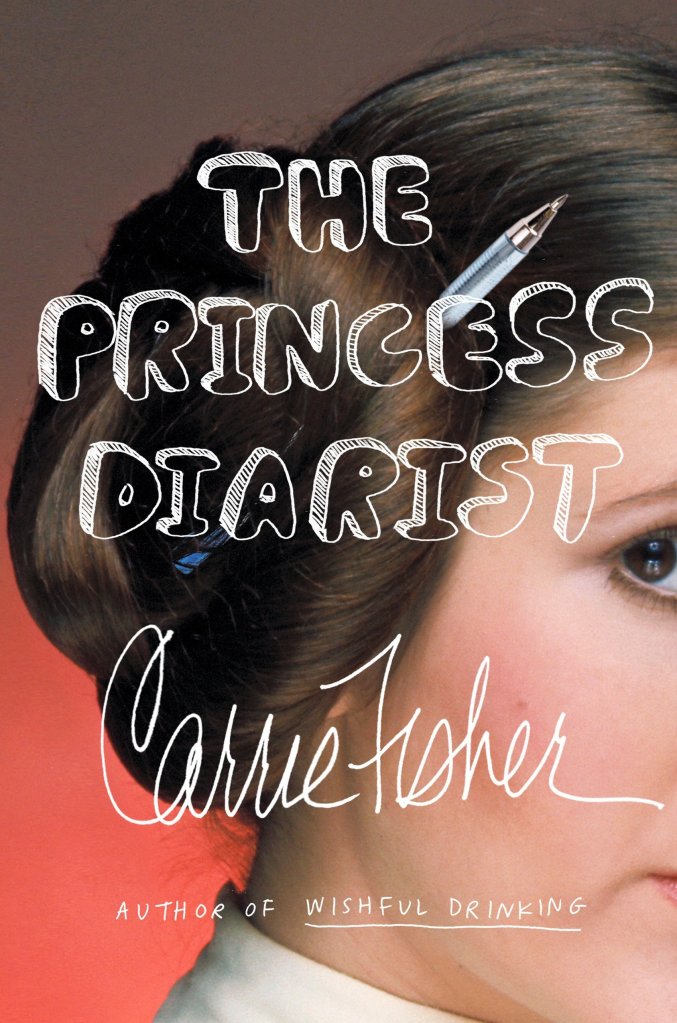
  1. The Princess Diarist by Carrie Fisher 

This book isn’t actually specific to mental illness, but it introduced me to Carrie Fisher – an incredible Bipolar disorder and addiction advocate – and that changed my life. 

When I found this book I felt very alone and unseen, but reading this was like seeing my brain laid out on a page. Someone else thought like I did, felt like I did. I’ve gone on to read all of her other books which range from entertaining to informative. And they are all hilarious. Carrie Fisher’s ability to turn a phrase is totally unique and unrivalled. 

  1. Unbearable Lightness: A Story of Loss and Gain by Portia de Rossi 

When I finally realised I had problems with food and restriction, I was struggling to wrap my head around it. This book helped me understand the severity of what was going on, and again made me feel less alone. It also helped me to understand the way I thought about food was not normal or healthy and how much it was hurting me, because I got to see it from an outside perspective.

I will warn that the details in this book are potentially very triggering and not necessarily helpful to those grappling with disordered eating, so a warning there if you are considering reading it. 

  1. Sedated: How Modern Capitalism Created Our Mental Health Crisis by James Davies 

This book was important to me as I started to be a bit more sceptical and analytical of the major narrative on mental health and the mental health system. I’ve had my fair share of unhelpful and downright damaging interactions with the psychiatric complex, and I started to question how we view, understand, and categorise mental distress, but it’s hard to find any research or information out there that even slightly criticises the accepted narrative. This book not only verbalised new ways to consider these issues but also provided evidence and further studies to explore. Of course, I don’t blindly accept everything in this book either – that would be counterproductive. But it was a huge relief to discover it and really helped me form a foundation for reimagining how we consider mental health and mental health systems within the wider social context of a capitalistic society. 

  1. 4.48 Psychosis by Sarah Kane 

This is actually a play not a book but I’ve only ever read the full script, not seen it performed, though my class did perform extracts as part of coursework, which was another interesting experience. 

In late February/ March 2020 I was experiencing my first mixed episode and it was truly overwhelming and terrifying. Sitting at my teacher’s desk in the drama studio I was scribbling something resembling poetry across several sheets of paper and one of my drama teachers caught a glimpse. They had been doing a truly incredible job of looking after me (something way above their pay grade) but I think by this point they were at a loss for what to do or how to help me process what was happening to me. 

However, upon seeing what I was writing this teacher remarked how it reminded her of Sarah Kane’s work. My teachers had a debate over whether to show me the play or not – after all it’s true it could have definitely triggered me further – but without much else to do, they gave it to me and told me to read it and come up with ideas of how it might be staged (a tactic that provided me a task to complete which was very helpful). 

I read the play and it was the first time in days that I felt anything close to calm or focused. The disorganised, brutal admissions of a mentally ill mind came to life around me and made perfect sense while the world around me seemed to make less and less sense. 

It made me feel seen in ways I had never experienced before, and also helped me realise that creativity doesn’t have to be neat nor does it have to conform to people’s sensibilities. My expression is mine alone and it can be as raw as I choose. 

I will say please use discretion if you’re going to read this and perhaps have someone on stand-by in case it affects you because it is very raw and cuts to the point of pain in a way I don’t think many of us are used to. Also I’d provide a trigger warning for pretty much everything for this one, but especially for self harm, psychiatric trauma, and suicide. 

  1. People, Places, and Things by Duncan Macmillan

Again, this is not actually a book but a play (can you tell theatre is my passion yet?) and I’ve never seen it performed. Emma – the leading lady – is my absolute dream role. 

This is basically a play about a woman’s journey through rehab and addiction into recovery, and I discovered it while still in active addiction but while I was still in denial. I related so much to her and her words; it helped me come to terms with my own addiction. And it gave me hope for recovery. 

Like 4.48 Psychosis some of the lines feel so deeply true it was almost jarring. And the innovation of the structure along with how it could be staged filled me with ideas and excitement for theatre all over again.