Posted in Mental Health, Personal Growth

World Bipolar Day 2024 – My Experience

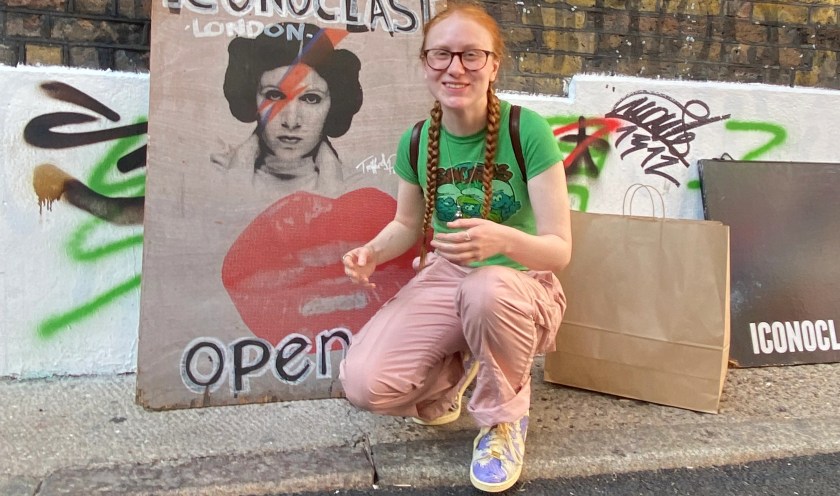
It’s World Bipolar Day. I’m Millie, and I am usually very open about my bipolar diagnosis. Why? Well, I don’t really have a filter. I’m also not ashamed of it. And most of all, I essentially try to be the person I needed to see. I write what 16 year old me was looking for, and I hopefully will go on to write what I’m looking for now. Do I worry how others will view me? Yeah, sometimes. Doesn’t seem to stop me. 

So it’s World Bipolar Day. Something feels odd about that name to me. Almost like I’m envisioning all of us emerging from some sort of hibernation for a day, wreaking havoc, and returning back to obscurity before the sun rises on the next day. We’re just so powerful they had to confine us to one singular day, lest the earth be run wild by crazies and mad ones. I jest, of course. I’m writing this stream of consciousness like piece because something does strike me about the day, the opportunity to speak and have it hold a defined place perhaps. I suppose this is a little insight into what my life as a young person with bipolar can look like. I hope you get something from it. 

I am proud to be bipolar. I can’t really explain to you why, but I am. Deeply. Yet it comes with many many challenges, and I’m not really referring to the symptomatic challenges here. Those are more complex than is generally understood, but I find some of the greatest challenges are the ones that emerge aside from (and of course interlace with)  the symptoms. For example: I am proud to be bipolar, but I am terrified my life will be defined by illness. Yet I understand that this idea of being defined by illness is in many ways down to me – I have this label, but it is my choice how to use it, and understand it, and it is most certainly my choice to embrace the struggles I have/will face. I made this choice. And I can change my mind.

Of course the world often tries to define you in certain ways. Many different institutions and models of working will not embrace my vision of myself. That is painful in many ways, and something I think must change in the mental health sector. I cannot walk into a psychiatrist’s office and say ‘today I would prefer to talk about my illness through a spiritual lens that opens up the possibility of deeper connection afforded to me. And I would prefer to use the term mad, not bipolar’. I can’t do that. In fact many of the things I think and experience, I would never be able to bring up in a mental health setting because of how they could be viewed through the lens of my illness. And that is deeply upsetting to me. If you are labelled mad, how can you ever convince someone you are sane? You can’t. 

I am aware my diagnosis can be weaponized against me, and of the fact that I frequently weaponise it against myself. I fear speaking my own truth in mental health spaces and advocacy because of how deeply ingrained the narrative of what is safe and sane is to me; I never want to cause anyone harm. But the fact is, in my own life I have had deeply spiritual experiences, often continuing from those first afforded to me when manic, that have been life changing. How quickly may they be labelled delusional? Psychotic? My very understanding of reality has been deeply shaken through my experiences that I am able to view as, yes, part of my illness but also something beyond and around that. And that changed understanding has led me to see the world with new openness, love, and curiosity. But I know in the wrong circumstances, that would be labelled symptomatic.

That’s not to say many of my experiences haven’t been troubling and scary. They have, but one of the ways I have found to navigate them is to accept them wholly, moving beyond the idea that they are all this illness that is separate to me, all something to be shunned. Would that work for everybody? Probably not. They’re not me. That’s why I’m not giving a step by step guide on what that looks like, because it’s a strange and beautiful process that has emerged from my personal journey. But I would like to impart the idea that we can maybe view things through different lenses, and in fact view them through more than one lens at the same time. An experience can be troubling, part of my bipolar, and positively affecting all at the same time. I have chosen to make room for that. 

Treatment for bipolar is so heavily dependent on medication in psychiatry. The path for therapy is not even slightly clear. The help is inadequate. And I refuse to believe there isn’t a better way. I respect anyone’s choices around medication, whatever they are. There has to be more to discover, more to discuss, more to live. Why aren’t we having the difficult conversations?

Bipolar disorder is a silent, invisible illness. Feels like it most days anyway. No matter how much I talk about it, I know people never seem to grasp it, or even think to look beyond the word at what that experience must really be like on a daily basis. And that’s more than ok, I do the same with a hundred other things. It makes sense. But sometimes I wish people got it more. Wish I could explain it better and more concisely. Because yeah, you’ve got the episodes and they are life changing and life threatening and life disrupting. It can be incredibly unpleasant. But you’ve also got the days in between. And for me that’s almost more difficult. I carry around a silent weight:

Once your understanding of reality, self, and the world has been fundamentally shaken in the way an episode can do, you can never go back. As mentioned above, that can be a beautiful thing. But it’s also… you can never go back. I can never see the world the same way again and there’s a grief that comes with that. There’s a lot of grief in bipolar. And there’s a fear that comes with that too. Or pressure. A drive, to live every moment, grasp life when it comes back to you, a fear it’ll slip away again, a pressure to catch up, get better, make it worth it. Whatever it is, it’s there. And somehow it’s like forever being on a slightly different wavelength to everyone else around me, unnoticeably. 

Episodes can be unpredictable. Even when I don’t realise it, I can be living on edge. 

I see in colour. I get bored stupidly easily. I am crazy creative and empathetic. Many of these sensations may, yes, originate elsewhere, but they are also intensely interwoven with my experience of bipolar. 

Being ok can be boring. Really boring, and itchy, and confusing, and a dangerous time. 

The mental health support out there is atrocious. I refuse to lie about it anymore, the mental health system in the UK is completely fucked. If it worked for you, great. It should work for other people too. But hey, shows it’s not impossible to learn how to navigate a serious mental illness using tools outside the expected norm. And in a way, that feels more right for me. I used to want professional help more than anything in the world, and I still do often, it pains me I never got it. But… I’m still here. I’m still me. I was blessed to be surrounded by some truly incredible people, and I wouldn’t be here without them. But now I am here, I’m proudly bipolar, and I’m still struggling, but I’m standing and… what I’m trying to say is that I’m able to be grateful for my path because I see the opportunities it has provided me to see the world and my illness differently. 

No one with bipolar is the same. Someone might not even want to use that label if they’re diagnosed! That’s completely fine too. I have many other terms I also use to describe my experience (language, what a wonderful enigma huh?). Just know that in whatever way it may be, living with this often isn’t easy for a million reasons you might not have expected or understood. As far as I’m concerned it’s not a good or a bad thing, it is what it means to each person. It’s just a thing that means something. You don’t have to understand it all – you probably can’t – but maybe just make space for some kindness and acceptance of its complexity, whether that be for you or someone else. 

Mills x

Posted in Advocacy, Mental Health, neurodiversity

Ideas On Mental Health Advocacy

I get wrapped up in big ideas. And big ideas are important – the overall picture is important and helps us to understand the everyday and the connections between different issues and events. But I’m interested in the idea of how we can be effective in making change too. So I consider the question – does focusing too much on the big picture get in the way of making any change at all? How accessible is it to only talk about the big picture? Are the wider ideas helpful in getting people who aren’t already interested in mental health advocacy involved at first? Essentially – how can we actually start to make change and reach more people?

The small steps are important. So too is every single voice raised, however it may be. I am reasonably good at writing and giving talks/ workshops. I also love theatre and am passionate about the arts, something I hope to marry more with my advocacy going forwards. I am not particularly good in a protest situation. I can get very overstimulated. I’m not good at phone calls. I’m not good at prolonged in person social interactions. There are many things I’m not very good at, and though I can still lend my skills to different situations, it may not be at the frontline or in the way you might expect. My power lies in recognising that – and so does yours. You do not have to come up with an innovative idea or put your life on the line to make a difference in this world. If you can do that, wonderful! But never underestimate the unique skills and voice that you bring to the table. 

So back to the matter at hand – small actions. Very important to have the wider context. But small actions built up are what really make a difference, right? Maybe! Ok, so where do we start? Ah – well there’s a problem now, because I don’t know. No one knows. 

Is the long waiting lists the place to start? Or perhaps the funding? But then can you ever really fund a broken system? I would say no. No, we cannot just fund a broken system. But I’ve also been in rooms in CAHMS and the adult mental health service where it smells weird, the paint is peeling, and the lights don’t work. So maybe we do need to bring the basic infrastructure up to a reasonable level of functioning as is before we can start reforming and introducing new ideas/ scaling back ideas that aren’t working? 

I personally would love to see an end to the carceral, cruel way the system is. But I also know most people are unaware of the true nature of the issues with the system, unable to imagine a world without it, and that the world runs on profit. So I wonder if by focusing on the immediate abolition of the psychiatric complex this part of mental health advocacy shuts people out? I don’t know! I’m not saying that I know the answer, but I think it’s important to keep asking the questions. Maybe we need to see it in steps. Steps that may eventually lead to a very different system (or even the abolition of psychiatry), but that in the meantime are still seeing improvements. And I know that improvement isn’t enough, but it is something. It’s a step on the way to freedom. 

But then here we are again at the question of where to start. Mental health is interconnected with all other social issues. So we could even argue that the first step would be ignoring mental health altogether and solely focusing on, say, housing security. But can we really do that without including mental health provisions? Probably not. So we need all these different voices and people working together on different issues! Ok, so awareness is the first step? But awareness that doesn’t just perpetuate the same easy to swallow narrative of mental health; awareness that acknowledges the need for system change and societal change too. Although, even that awareness sounds complicated so we’re gonna have to start with easier awareness to get people on board, right?

Ok so, maybe awareness alongside something else. Fighting for funding? For changing the laws on sectioning? Both? Maybe… fighting to have a nationwide, government wide, deep conversation about what steps need to be taken. Fighting to be heard by the people with the direct power to start making those changes, so we can make a plan with them. Maybe? Or is that even too tall an order?

See, I prescribe to honest activism here at Our Happy Notes. I have chosen to share my journey with you in changemaking, and for me that means also sharing my thought processes about changemaking sometimes. This is something I am currently taking time to research, to read on, and to hear other people’s ideas on – to try and ascertain where actually might be a feasible starting place, and if that’s even a good idea. I’m not at a point in researching and discussing where I am able to come up with an idea that I can articulate and share or point people towards. But I wanted to share a bit of this process anyways, because I think at the moment I do believe all change starts with a simple conversation; connection. 

So what do you think? Do you think there is one specific demand or issue that needs to be in mental health advocacy to set the ball rolling? Do you have something in particular that you think needs to be looked at? Please let me know! 

And also… how can you use your voice? That’s a question for you to consider. It’s ok if the answer right now is that you can’t. 

Sending all my love and support to you all today xxxx

Posted in Advocacy, Mental Health

Why We Should All Be Mental Health Advocates

Why Should You Care About Mental Health?

  • We all have mental health 
  • 1 in 4 people are dealing with what can be classified as mental illness every year 
  • Any of us may need to navigate dealing with or loving someone with mental illness at any time 
  • Any of us may end up trying to navigate the mental health system at any time
  • Mental health is intertwined with every part of our lives – think about the impact that grief, food scarcity, racism, work stresses and expectations etc etc etc have on our mental wellbeing 
  • People are dying

Why should you care about mental health advocacy?

(in other words, advocating for better support, systems, awareness and more around mental health)

  • The mental health system is currently failing – and in many cases harming and abusing – the vulnerable people looking for help. We all deserve better
  • Mental health advocacy can encompass lots of different areas of interest and support, like access to food and environmental connection, so no matter your field of interest you can incorporate it into your life – and together we can make a difference 
  • Better societal structures surrounding mental health would help us all on a daily basis (for example different expectations of productivity at work, no poverty, suitable housing for all, proper support for cost of living, community support etc etc)
  • Lives could be saved
  • We could have better ability and language to describe our experiences and understand the human condition to connect with each other 
  • Mental health advocacy can build community and genuine connections 
  • You can be part of a movement full of love and care, and get to help redefine what human distress means
  • Mental health advocacy hopes for all of us to lives happier, freer lives

How can you start getting involved?

  • Question what you assume to be true about the mental health system and the way we view mental illness; listen to psychiatric survivors and mad and mentally ill voices to expand your understanding, and your views of what the future of care could look like. Always keep learning and listening 
  • Start conversations with family and friends 
  • Write to your MP (or other representative)
  • Share information, but be careful what information you share 
  • Support local food banks, housing associations, and all range of initiatives in your local community – help build community
  • Look after yourself and define what healing means in your own life 
  • Connect with others who care about mental health advocacy – you can do this online as well as in person 
  • Use your own skill set – if you are an artist or a writer, an organiser or a fundraiser… use these skills! Don’t ever believe that you have less power just because you aren’t doing the same thing as others; we are stronger as a group, with everyone chipping in 

Please share this post with people in your life to start the conversation around mental health advocacy, and how we can make a change together.

Posted in Advocacy, Mental Health

Mad Liberation: The Missing Piece of The Puzzle

There are a lot of social movements now that are gaining awareness and support in new ways thanks to the global communication the internet has made possible. For example, feminism, Black Lives Matter, climate activism etc. And it’s very encouraging to see that more people are becoming aware of how these all link together too. There’s still a very very long way to go, that’s for sure, and in some ways the enormity can seem overwhelming. But there’s certainly movement happening in these movements, and a lot of passion. But what about mental health? 

When we think of the mental health movement we think of mental health awareness. And for the vast majority of people what they come in contact with under ‘mental health awareness’ is hotline numbers, slogans telling people to reach out, self care tips, and really very repetitive, surface level approaches. The general public does not seem to be aware of the deep issues and abuses in psychiatry, how we view mental health, and how it really impacts all of our lives. In all the fighting for a better future, mad liberation is overlooked, underestimated, misunderstood, or ignored. And that’s damaging for all of us. We cannot be fighting for racial justice, trans rights, and human rights without mad liberation. And yet so few people seem to be aware of it – in fact many people seem scared to approach the topic, which just shows how deeply the stigma and ignorance runs. Maybe, just maybe, mad liberation is the missing piece in the social justice fight. 

Take for example the language we use to describe other social movements – you are a climate activist, a civil rights activist, a human rights activist, but you are a mental health advocate. That’s not to say advocate is a bad word, it is absolutely not, and it’s a badge I’m proud to wear. But to call myself a mental health ‘activist’ sounds wrong. Why? Is it because advocacy feels more acceptable? Perhaps it connotes simply raising awareness within the status quo, continuing to adhere to systems already in place rather than radically opposing them and fighting for change. Maybe not, but I certainly think there’s something in the language.

 Furthermore, why is it always mental health advocate, and rarely mental illness advocate, or madness advocate? For me that sums up the major narrative surrounding the mental health movement, because it focuses on the palatable part that challenges less assumptions and less people, that appeals to everyone. Everyone has mental health, so everyone should care about mental health! Yeah – that’s not wrong. But a lot of people are deemed mentally ill. A lot of people deal with the consequences of madness in this society their entire lives. And the narrative focusing on the easily digestible, easily implemented parts of mental health awareness leaves them behind yet again. It silences and harms them. 

Psychiatry uses mental illness to uphold societal values. Always has. That’s why drapetomania was a proposed mental illness to explain why slaves wanted to escape slavery. That’s why being gay was classified as a mental illness until 1990, and being trans was classified a mental illness until 2019. And that is why one of the major diagnostic criteria for mental illness nowadays is disruption to a person’s ability to work – productivity and fitting into expectations of normality are societal values. 

But people are very rarely encouraged to consider this. They are encouraged to be aware of the signs of common mental illness in the context of deriving from the expectations placed upon us, and recovery in the context of making people be productive citizens again. The common mental health awareness narrative traps us. It does not allow us to redefine healing, to discover the socioeconomic factors in wellbeing, to find community, or to change the pace at which we live. It does not allow us to think about the deeper questions of why, and how can this really be better. 

But what would happen if we questioned? We would hear the voices of psychiatric survivors shouting about the abuse they have endured in the mental health system. We would discover how mental illness and criminalisation are deeply intertwined, and perhaps discover how to create true justice by supporting and liberating people in new ways. We would start to ask, what would happen if we didn’t sedate people into the same reality, but rather found ways to help people incorporate their own reality into their world? We would find new ways of sharing resources, kindness, connection, and changing the pace at which we live. We would find new language to define our human experience. We would free all of us to actually consider what happiness entails. Finally, we would find the link to all the other socioeconomic problems we are facing today, and in doing so find new solutions and progress towards all of them. 

We need to be kind and we need to be supportive, but we don’t need to be afraid to really ask questions about mental health, its presentation, and the treatment of madness as it is. Mental health activism is needed. Mad liberation is needed. But a deep held belief that mad people need protecting – or being protected from – has too often tried to stifle the missing piece in social justice movements. Mad people deserve to be heard, believed, and treated with respect and dignity in social action spaces just like anyone else. 

So I ask the question – is mad liberation the missing piece? 

Maybe. I don’t know for sure. But I think it might be. I certainly think solidarity between oppressed, hurting, and caring people is necessary for progress. We won’t fix everything; we will get things wrong. But as long as we keep questioning, and keep learning, we can make a difference. It’s worth a try at the very least.

Posted in Advocacy, Mental Health

10 Reminders for Mental Health Week

This week is mental health awareness week here in the UK, and it’s mental health awareness month in the USA. Therefore you’re likely to see a lot of information – and misinformation! – floating around. A lot of people making gestures towards mental health, and hollow gestures too. I’m obviously a mental health advocate all year round, and I’m also neurodiverse, mentally ill, and disabled all year round. So it’s not just a week for me, and in fact this week can be difficult for me because instead of showing me how far we’ve come it becomes glaringly obvious to me how far we still have to travel. It’s frustrating to see people posting hotline numbers, empty phrases, and self care tips without even hinting at the deep issues surrounding mental health. To be clear, I don’t blame individuals, it just reminds me how frustrated I am with the system.

So today here are 10 reminders of things you might not be hearing so much this mental health week that we still need to keep in mind:

1. The mental health system is failing, and inherently linked with the criminalisation of mental illness. You cannot simply fund a broken system

2. Psychiatry is used to uphold what society deems as acceptable

3. There is a lot of psychiatric abuse, which continues to go unknown by many. We must listen to psych survivors, who have been systematically silenced for years

4. Yes we all have mental health, and that is very important. But choosing to focus on the palatable narrative that goes along with ‘we all have mental health’ tends to ignore the chronically mentally ill, mad, and ostracised. Essentially, if you are talking about mental health you also need to talk about the parts that aren’t as easily digestible

5. The goal of healing should not be productivity

6. We cannot stick a bandaid on the mental health crisis without addressing the deep underlying socioeconomic problems in this country

7. We cannot heal in a vacuum. Community is needed for good mental health

8. This is actually a life or death issue for many people. We don’t have to get dragged down in the sadness of that all the time, but it is important to remember the gravity of it

9. If everyone needs therapy then society is sick, not each individual

10. Diagnosis and/or medication do not work for everyone

Thanks for reading! Sending so much love and support to you all today xxx

Posted in Mental Health, Personal Growth

Fear of Going Crazy

Two years ago a group of young changemakers, including myself, came together for a discussion. We decided that we would all come dressed as our worst fears. There was one person dressed as a bat, another as a spider; one came as the idea of losing love. I came dressed as the fear of losing my mind. As someone with chronic mental illness, it’s not a fear that feels far away – it’s not a distant possibility that one day I’ll get dementia. It feels very real, very possible, and very close. And I wanted to talk about that here today, because it’s a part of my mental health experience that I haven’t seen reflected in many places.

Me dressed as the fear of losing my mind

I think many people with experience of mental health issues, or big emotions, can relate to the feeling that it’s never going to get better. In times of depression, grief, and heartache our ability to truly envision a future and see the fullness of life becomes warped. It’s a terrible phenomenon that unfortunately has taken many lives. I’ve experienced it myself many times and it is terrifying. But the feeling of going crazy, the fear of it, is something different for me. In intense moments it takes the same inability to see things getting changing and redirects them towards a feeling of a loss of self and loss of reality.

As a mentally ill person, despite owning the idea of being ‘mad’ with great pride, I feel I am constantly running from the idea of being seen as crazy. Which is almost certainly related to the stigma around certain symptoms – namely the less pretty ones, mania, psychosis, irritability, flight of ideas etc; the stigma around the idea of being ‘crazy’. My mental health difficulties are a huge part of my identity – by my own choosing – and yet I still feel a need to mask how they really are lest I lose control over the narrative of my own mental illness. So that’s a part of this fear, it’s not really a fear of losing my mind, but a fear of being seen as crazy and losing autonomy and connection because of it. A deep fear of being misunderstood and unseen.

Yet the real, gnawing fear for me is internal. It is a fear that one day I will become irreversibly changed; I will lose all knowledge of our shared reality and slip entirely into a different one; I will enter an episode and never come out; I will lose myself. It’s ridiculous really, because we are constantly irreversibly changed, and our idea of self is constantly changing. Most likely the fear is rooted in internalised ableism compounded by my experiences of madness.

As Carrie Fisher once said ‘once you’ve lost your mind you don’t know it’s missing’ (that wording may not be right, but that’s the gist). So really the end result that I’m so scared of would actually just be a different way of being. Nothing inherently better or worse about it for me. So what am I really afraid of? Other people’s judgments. A lack of autonomy and care. And perhaps ‘going crazy’ and then reemerging, as would most likely happen in all the scenarios I imagine. Because I have actually lost myself before – when I was drinking I lost sight of who I was. That process of reemerging is deeply, deeply painful so maybe that’s what I’m afraid of. And finally, when I am not in the intense whirlwind of feeling like I’m going crazy, I think what I fear the most is being in that whirlwind again.

Let me attempt to illustrate why the whirlwind is so terrifying. You see, in that place I am two versions of myself at the same time – trapped in a paradox being ripped apart with searing force. One version of myself is the whirlwind. It is the tornado, screaming and tearing through life. The other version of myself stands in the eye of the storm, trying to avoid its path, screaming pointlessly into the spiral to remember who we really are while losing touch with who I am at the same time. Mostly all I can hear is the version that becomes the tornado, but there comes these background thoughts, senses and moments where the version of myself that sees life more clearly breaks through. 

And really it is the background knowledge that something is not right, that there will be consequences, that I am hurting – it is that reminder of who I am that makes me so afraid and so hurt. I know somehow that something is wrong, but I can’t stop it. This paradox creates the fear of going crazy, because I’m trying to figure out what’s real, trying to be less angry, trying to do the right thing and still getting it wrong. The moments when the whirlwind drowns out all sense of self are actually more peaceful, in a strange way.

It’s really a pointless fear. I can do all I can to protect myself and those around me and nothing more. The idea of being judged is useless to me; the internal ableism is something for me to face. But still this fear raises its head every now and then. This year at drama school I became convinced I was ‘disappeared’ – not that I had disappeared, that I was disappeared. I was so far away from myself and yet able to drift through my life and I feared that it would be that way forever. It wasn’t. Most things don’t last forever and that is wonderful. Essentially, if you’re a mentally ill person who shares this fear – hi, you’re not alone! And if you’re not and this sounds to you like I’ve already gone crazy, who knows – our realities are only relative anyway. I choose to set free this fear today and face my future with love and action instead. Sending love and support to you all today xxx

Posted in Advocacy, Mental Health

I Don’t Know What To Do

I sometimes call myself a mental health advocate. I’d like to say I am one, but sometimes I feel like I’m not. Because I don’t know what to do. 

We need more awareness, yes, but actual awareness, critical awareness of how we form our views of mental health and the intersectionality of societal issues. I can – to a point – help raise awareness, and I try to. But if I’m honest it feels a bit useless sometimes. I honestly have no idea how to make tangible change. Of course we can write letters and go to protests – but in the current political atmosphere I wonder if it’s doing anything at all; it’s hard to watch the government become what I genuinely believe is more and more fascist and not know a way forward. Then of course we can also make art, have conversations, create peer connections and connect with nature. This is generally what I focus on because it seems achievable, and I really do believe small changes build up and matter greatly. But underneath it all I am at a loss. 

Why am I telling you this? Because I think a lot of us feel helpless. And because I want to explain why I don’t share more actions to take – because I don’t know what actions to take. It’s something I want to focus on more, and I think maybe a good place to start is by sharing openly that I don’t know what to do. It’s easy for us to sit back and do nothing simply because we are unsure of what to do, or because we are afraid. The sense of hopelessness or helplessness is perhaps one of the most pernicious ills we have learnt; it separates us and takes away our power even further. Of course it’s understandable. How the hell do we stop climate change when the overwhelming majority of emissions come from huge corporations? How do we reform the mental health system when most people are unaware of its issues and the bodies in charge aren’t listening? I don’t know. But I think maybe, just maybe, it might start with people working to build communities again; to build connections again. 

I’m an 18 year old who can barely keep their own head above water some days. But I want to help. I want to connect and be a part of change. I want to listen and learn and build. I’m sure in the future I will think differently about some of the things I’ve already said and written; I’m sure I have and will get things wrong, even cause harm through mistakes. And you know what? That’s ok. Because fear of getting it wrong, of being helpless or not having a voice, are not worth staying silent. All we can do is do the best we know how to at the time and stay open to learning.

I don’t know how to begin to face the systematic issues with mental health treatment. I don’t know how to involve everyone in the conversation, how to raise my own voice without speaking over others. I don’t know if there should be no psychiatry at all (because it is absolutely a harmful system), or reform it, or if it is even possible to reform. I don’t know how we can use language differently and how it might help. I don’t know! But I want to find out. I want to listen to all the voices, I want to learn and I want to have a go. Yeah, we’ll probably get things wrong. But we have to try, right? 

If you have any resources, readings, ideas or anything else you’d like to share to help me (and others) grow in our action, please share them in the comments or via the contact page. 

Sending love and support to you all today xxx

Posted in Managing Mental Health, Mental Health, Personal Growth

What Grief Means To Me

Grief is something all of us will experience in our lives because death and endings are a part of life. And I suppose that can be a comfort, a way to make the grief make sense, but it doesn’t mean that it doesn’t hurt. However the idea of grief is something many of us associate solely with death; in this last year redefining what grief is for me has helped me to process it and let myself grow. Grief doesn’t just apply to the death of a loved one – it applies to the end of a situation, a relationship, a friendship. 

This post isn’t a deep dive into grief – the stages, the processes, the sharing and healing etc – there are so many wonderful resources out there already for that (although I would encourage anyone interested to also look for creative explorations and presentations of grief in art, theatre, literature etc because it’s so healing). This post is more like me outstretching my hand with my own experiences to tell anyone out there who might happen to stumble across this that it’s ok, I’ve been there too.

In the last year I have grieved a lot. And it hasn’t always been sad – I think most of us know grief isn’t like that. In fact, I didn’t even realise at first that I was grieving; being autistic I just thought I was having a hard time adjusting to change, and I felt a lot of shame around that, the need to just move on quicker. And, ok yeah, I do definitely find change difficult. But noticing and naming the grief has actually set me free a bit. 

In June I lost my home. I left in the morning and I never went back; I had no idea that would be my last time leaving that house. I don’t remember leaving, I don’t remember the last thing I said to that person, the last time my dog came to say hello to me in the morning – because you’re not meant to remember those things. I had almost no reaction for 8 months, and then an intense explosion of anger. Feeling sad about it is still hard. And for a lack of a reaction, I thought I had a lack of grief. But I don’t. It affected my ability to feel safe in the place I am living, always feeling like any moment it could be pulled out from under me, and with that came the grief. That uncertainty was my way through to grief. 

I also left my school, which I considered my home. And this was so hard to grieve because it seemed like everyone else moved on quicker and I was just stuck, but grieving school has been perhaps the most transformative experience of this year. It’s been my path through to expanding my sense of self, world, connection, and love. It also hurts. So if like me you are thinking you’re being too slow to move on from something, please know it is alright. You are allowed to take up space, to feel, and to go on your own journey. Even if it’s a positive step, leaving behind things that mattered so much to us is painful. And we do grieve things, situations and places – not just people. 

I believe the thing about grief is you can’t force it or rush it. The only thing you can do is allow it, without allowing it to consume you. It’s hard but life does carry on. Maybe joy and excitement and purpose won’t look the same as before, but you are allowed to redefine these things. 

This year I have grieved the death of my grandmother; the possibility of a relationship that could have been in the context of a death that will be; and perhaps strangest of all, I have grieved the living. All of these are complicated, all of them come with different challenges and presentations. Sometimes I feel shame because my strongest reactions are about a dog, or a place, rather than the person who has actually died. But really they all mix together in a way too; they link and lace around each other to become an imprint on me and my journey. I’m ok with that. 

Point is – there is not one way to grieve. There is not one situation in which grief appears. And all of us will grieve many many times in our lives. This is your journey to figure out, but not alone; we are connected in our love and our loss, however it finds us. 

Sending so much love and support to you all today xx

Posted in Advocacy, Mental Health

Why Do We Pathologize Pain?

We’ve come to pathologize emotional pain and human distress. That’s to say, we’ve come to medicalise it – give it labels that make it into a medical problem. And of course this serves a purpose in our society and our systems; I personally am hugely grateful for my mental health diagnoses because they help me understand myself and how I view the world. But the term ‘pathologizing’ goes beyond just medicalising emotions. It defines the problem that ensues from medicalising our emotions. 

According to the Cambridge dictionary, pathologizing means: ‘the act of unfairly or wrongly considering something or someone as the problem, especially a medical problem’. This is something we see in mental health spaces all the time, with very little awareness of it. The way we discuss mental illness is so often through an individual lens. We ignore how the modern world’s expectations affect what we see as disordered – for example a huge criteria for mental illness diagnosis is a lack of productivity. But productivity is defined by societal norms and expectations. We label someone as depressed, saying they have a chemical imbalance while ignoring the fact that they are living in poverty and perhaps if they weren’t their mental health would look very different. At best we say that these external factors are simply contributors and not an essential part of our human experience; we ignore how we define was is disordered or not entirely. 

There’s a million problems with this. It prevents us from trying to build a better world in a more informed way. It isolates sufferers and prevents them from getting the kind of care – like housing, community, less workload – that they actually need. I could go on and on about this (and I do quite often!) but today I want to answer the question – why do we do this?

Well pathologization stems in many ways from medicalisation. I think there’s benefits and issues within this itself, but it’s understandable why we do this. By giving clear criteria for diagnosis in a medical format it would seem we can more easily start a larger number of people getting treatment. Unfortunately this isn’t the case, but in theory this would seem to make that easier. It also allows us to have some kind of framework to understand ourselves and more easily find others who may have a similar experience – it has certainly helped me with this! And in theory it would help others have a doorway to understanding people with a mental illness by looking at it through a medical lens, so they would know how to start approaching the problem. Furthermore it also gives a structure for how we can syphon off funding for mental health care by making it a wholly medical service. All logical and on the surface optimistic reasons to medicalise emotional pain. 

But soon we see the problems come in such as trying to ‘fix’ people to medical standards too rather than to their own standards. We start seeing people as the medical problems rather than as people with diverse experiences. We try to fit people into one route for fixing the issue because that’s easier. Medical problems need medical solutions right? Medication and hospitalisation rather than community and economic support. We see them as scores and issues. And soon we are pathologizing them. The individuals become the problem they present with, and when the one-size-fits-all treatment doesn’t work, we assume it must be the individual’s fault. 

Maybe it’s just a natural progression from medicalisation then? But maybe it’s also a symptom of the way our western society functions as a whole. We are not exactly encouraged to see ourselves in the context of the world around us. We’re told we are individuals and isolated in many ways – so it would make sense that we see our problems as individual problems that need isolated solutions. So simply because of the way we have learned to exist in the world we don’t think to see our emotional distress as interconnected. 

Then of course, as already mentioned, we live in a society driven by productivity at ever increasing speeds. We have an intolerance for difference, for people who need different support or cannot fit themselves into the world’s expectations of them. So we need to label them as disordered rather than face the idea that the way the systems are running isn’t working. It negates society’s responsibility to change and accommodate. But the thing is as the world gets faster, the economy gets worse, pressures get bigger, more and more people are finding themselves with mental health issues. Do you really think this is a coincidence? The world is becoming more and more incompatible with human rhythms of nature, so more people are finding themselves in distress. But also if the expectations shift to demand more of us or different things from us, then whatever behaviour doesn’t fit those expectations ends up being labelled as disordered. 

And maybe it’s fear – we don’t want to face that we share emotions with someone with schizophrenia or bipolar. We don’t want to admit we relate to an autistic person, or can kind of see the sense in what that psychotic person is saying. We are scared that the difference lives in us too, maybe? And again – we have not learnt the skills to be able to conceptualise how others may live differently to us through their perceptions of the world. We have not learnt tolerance, nor we have not learnt to question the status quo – because it would threaten the status quo. 

I think we pathologize pain because it’s the easiest thing to do when everything else seems so overwhelming. But we can begin to change this simply by opening ourselves to compassion; opening ourselves to a different narrative. We are all human and we are allowed to have deeply painful, wonderful, beautiful human experiences. That means sobbing our eyes out or seeing shadows no one else can. Feeling does not make us the problem. 

Hopefully that made some kind of sense, my little brain ramblings on the internet. Sending so much love and support xxx

Posted in Managing Mental Health, Mental Health

Nature and Mental Health

I think the connection between nature and mental health is under-utilised. 

There are hundreds of studies out there looking at the proven positive effect time in and connection with nature has on our mental health, but I’ll be talking from a more holistic/ theorised place today. 

I think we have learnt to see ourselves as separate from nature, but the truth is we are part of nature. We breathe the same air as all animals, given to us by trees and plants. We are connected to the same ground as all flowers and vegetables, all fruits and roots. We are nature. We’re nature with opposable thumbs. So of course climate change affects us – not only on an intellectually anxious level, but a deep intrinsically natural level. Of course a sunset or a flight of birds can inspire us on an instinctual level. We don’t need to completely understand it, define it – of course at a scientific level that’s useful. But on an emotional level? I think just leaning into that connection can help set us free. 

The pace of the world we live in is in direct juxtaposition to nature. In the western world at least we run at what I think is an unattainable pace. The capitalistic society is intent on promoting not only individualism but also productivity. And we’ve learnt that productivity is a good word. The model citizen is a productive citizen – this really means blindly following the rules put upon us and always striving for more, at a faster rate. Not only does this harm us individually, but it is a driving cause behind the industries that are contributing most to climate change and destroying the nature we are so deeply connected with. So we are severed from the nature we are a part of, and told to keep busy enough that we never question the system we have become a part of; perhaps more importantly, in order to have the resources to survive we cannot question. We are placed in a deep survival mode, and often forced to be unaware of it. 

The next logical step would be to assume that a person with a mental health issue is individually at fault. A weakness in the mind, a personal problem. It isolates the sufferer further and gives the rest of the world and excuse to keep going as is. The common narrative surrounding mental health awareness continues to ignore, on the whole, how much societal and economic factors are contributors and causes of mental illness – and by extension how a lack of connection with our roots in nature is a contributing factor. It should be made clear I am not advocating for full blown communism or anarchism or anything like that – it’s not like we haven’t seen ample issues when those structures have tried to be deployed in the past! In fact I have very little idea how to face these issues on a wider scale. But I know how to face them on a smaller scale; I know where to start (I think) and maybe that’s enough for now. To start, perhaps we look to the pace of nature; to the connection we inherently have (but so often ignore) with nature and our fellow beings. 

Nature does not rush. It works at exactly the pace it needs to. In fact time itself is a structure we have projected onto the world to help us make sense of it – with very obvious reasons for helping us level our experience with each other. But what the construction of time can tell us is that though we may share hours between us, we can redesign what the contents of an hour should be. To explain: resting for an hour in the grass can be redefined to be just as important as furiously analysing stocks to meet a deadline. We can redefine what productivity means and looks like. Nature rests in winter – its pace changes to match the weather and the temperature, the presence of bees and hibernation of bears. And nature still survives. So by extension, perhaps we can learn to respect our rhythms. To work with the sun, to respect the rain, to rest when we are tired and flow when we are not. We are not machines – we do not have endless energy or an ability to always be running. We are not all designed to sleep and wake at exactly the same times each day. We are nature. Maybe we can learn from it. 

Then of course there is the simple benefit of being among other nature. As mentioned countless studies – and poems and songs and personal experiences in each of our lives – record the boost to our mental health when among nature. Simply taking time to sit under a tree and imagine our own roots connecting, or take a walk in the woods (if that’s possible – everyone should have access to green spaces), or swim in a lake, run through a field, watch the flowers in the breeze or the sea crash to shore. Simply taking the time, even if it is only a minute, to start learning how to just be again – alongside our nature – can have a huge positive impact. It can calm us, make us feel more connected, happier, lighter. 

Oh and by the way, this isn’t new or revolutionary. It’s been strategically forgotten and hidden. Native communities around the world have known this for such a long time; the colonial view of society and mental health has detached us from this. I’m not at all the person to be listening to on this perspective and this history  – but here’s just one article written by Indigenous writer Edson Krenak Naknanuk from Brazil about connection with nature: https://www.culturalsurvival.org/publications/cultural-survival-quarterly/indigenous-peoples-are-essential-rights-nature

As the article explores, a view to see nature as a part of us – something in a reciprocal relationship – is important when looking to solving climate change too. 

Remember – we all breathe the same air; we share a consciousness of being through nature. So why do we seek to intellectualise that connection always? How does that separate us from our connection with freedom of mental health? How can nature support us mentally, as a community and individuals?

Sending so much love and support to you all today xx

P.S. For a related science look at some of these topics I would recommend the book ‘Beyond Biocentrism’ by Robert Lanza and Bob Berman