Posted in Mental Health, Personal Growth

World Bipolar Day 2024 – My Experience

It’s World Bipolar Day. I’m Millie, and I am usually very open about my bipolar diagnosis. Why? Well, I don’t really have a filter. I’m also not ashamed of it. And most of all, I essentially try to be the person I needed to see. I write what 16 year old me was looking for, and I hopefully will go on to write what I’m looking for now. Do I worry how others will view me? Yeah, sometimes. Doesn’t seem to stop me. 

So it’s World Bipolar Day. Something feels odd about that name to me. Almost like I’m envisioning all of us emerging from some sort of hibernation for a day, wreaking havoc, and returning back to obscurity before the sun rises on the next day. We’re just so powerful they had to confine us to one singular day, lest the earth be run wild by crazies and mad ones. I jest, of course. I’m writing this stream of consciousness like piece because something does strike me about the day, the opportunity to speak and have it hold a defined place perhaps. I suppose this is a little insight into what my life as a young person with bipolar can look like. I hope you get something from it. 

I am proud to be bipolar. I can’t really explain to you why, but I am. Deeply. Yet it comes with many many challenges, and I’m not really referring to the symptomatic challenges here. Those are more complex than is generally understood, but I find some of the greatest challenges are the ones that emerge aside from (and of course interlace with)  the symptoms. For example: I am proud to be bipolar, but I am terrified my life will be defined by illness. Yet I understand that this idea of being defined by illness is in many ways down to me – I have this label, but it is my choice how to use it, and understand it, and it is most certainly my choice to embrace the struggles I have/will face. I made this choice. And I can change my mind.

Of course the world often tries to define you in certain ways. Many different institutions and models of working will not embrace my vision of myself. That is painful in many ways, and something I think must change in the mental health sector. I cannot walk into a psychiatrist’s office and say ‘today I would prefer to talk about my illness through a spiritual lens that opens up the possibility of deeper connection afforded to me. And I would prefer to use the term mad, not bipolar’. I can’t do that. In fact many of the things I think and experience, I would never be able to bring up in a mental health setting because of how they could be viewed through the lens of my illness. And that is deeply upsetting to me. If you are labelled mad, how can you ever convince someone you are sane? You can’t. 

I am aware my diagnosis can be weaponized against me, and of the fact that I frequently weaponise it against myself. I fear speaking my own truth in mental health spaces and advocacy because of how deeply ingrained the narrative of what is safe and sane is to me; I never want to cause anyone harm. But the fact is, in my own life I have had deeply spiritual experiences, often continuing from those first afforded to me when manic, that have been life changing. How quickly may they be labelled delusional? Psychotic? My very understanding of reality has been deeply shaken through my experiences that I am able to view as, yes, part of my illness but also something beyond and around that. And that changed understanding has led me to see the world with new openness, love, and curiosity. But I know in the wrong circumstances, that would be labelled symptomatic.

That’s not to say many of my experiences haven’t been troubling and scary. They have, but one of the ways I have found to navigate them is to accept them wholly, moving beyond the idea that they are all this illness that is separate to me, all something to be shunned. Would that work for everybody? Probably not. They’re not me. That’s why I’m not giving a step by step guide on what that looks like, because it’s a strange and beautiful process that has emerged from my personal journey. But I would like to impart the idea that we can maybe view things through different lenses, and in fact view them through more than one lens at the same time. An experience can be troubling, part of my bipolar, and positively affecting all at the same time. I have chosen to make room for that. 

Treatment for bipolar is so heavily dependent on medication in psychiatry. The path for therapy is not even slightly clear. The help is inadequate. And I refuse to believe there isn’t a better way. I respect anyone’s choices around medication, whatever they are. There has to be more to discover, more to discuss, more to live. Why aren’t we having the difficult conversations?

Bipolar disorder is a silent, invisible illness. Feels like it most days anyway. No matter how much I talk about it, I know people never seem to grasp it, or even think to look beyond the word at what that experience must really be like on a daily basis. And that’s more than ok, I do the same with a hundred other things. It makes sense. But sometimes I wish people got it more. Wish I could explain it better and more concisely. Because yeah, you’ve got the episodes and they are life changing and life threatening and life disrupting. It can be incredibly unpleasant. But you’ve also got the days in between. And for me that’s almost more difficult. I carry around a silent weight:

Once your understanding of reality, self, and the world has been fundamentally shaken in the way an episode can do, you can never go back. As mentioned above, that can be a beautiful thing. But it’s also… you can never go back. I can never see the world the same way again and there’s a grief that comes with that. There’s a lot of grief in bipolar. And there’s a fear that comes with that too. Or pressure. A drive, to live every moment, grasp life when it comes back to you, a fear it’ll slip away again, a pressure to catch up, get better, make it worth it. Whatever it is, it’s there. And somehow it’s like forever being on a slightly different wavelength to everyone else around me, unnoticeably. 

Episodes can be unpredictable. Even when I don’t realise it, I can be living on edge. 

I see in colour. I get bored stupidly easily. I am crazy creative and empathetic. Many of these sensations may, yes, originate elsewhere, but they are also intensely interwoven with my experience of bipolar. 

Being ok can be boring. Really boring, and itchy, and confusing, and a dangerous time. 

The mental health support out there is atrocious. I refuse to lie about it anymore, the mental health system in the UK is completely fucked. If it worked for you, great. It should work for other people too. But hey, shows it’s not impossible to learn how to navigate a serious mental illness using tools outside the expected norm. And in a way, that feels more right for me. I used to want professional help more than anything in the world, and I still do often, it pains me I never got it. But… I’m still here. I’m still me. I was blessed to be surrounded by some truly incredible people, and I wouldn’t be here without them. But now I am here, I’m proudly bipolar, and I’m still struggling, but I’m standing and… what I’m trying to say is that I’m able to be grateful for my path because I see the opportunities it has provided me to see the world and my illness differently. 

No one with bipolar is the same. Someone might not even want to use that label if they’re diagnosed! That’s completely fine too. I have many other terms I also use to describe my experience (language, what a wonderful enigma huh?). Just know that in whatever way it may be, living with this often isn’t easy for a million reasons you might not have expected or understood. As far as I’m concerned it’s not a good or a bad thing, it is what it means to each person. It’s just a thing that means something. You don’t have to understand it all – you probably can’t – but maybe just make space for some kindness and acceptance of its complexity, whether that be for you or someone else. 

Mills x

Posted in Advocacy, Mental Health

Language and Mental Health

Language is one of the foremost ways many of us use to communicate and convey ideas and, crucially, meaning. The intricacies of the meaning in the language we use are myriad and will vary even from person to person; it is a wonderful and beautiful thing. Unfortunately many people do not have equal access to language (think of non-speaking autistics denied access and support to use proper AAC equipment; the thousands of children, especially girls, denied the right to education and literacy etc etc), but that’s a topic for another day. Today I want to talk specifically on the importance of use and language surrounding mental health. To be clear this post is not a deep dive, but an introductory exploration. 

Much of the language we see used most commonly around mental health is highly pathologised – it has medical connotations and meaning. Often this translates to seeing emotional, mental, and physical responses as indicative of a disease or disorder, and as such having connotations of being a deficit or inherent fault. Mental health itself connotes also the possibility of illness, and therefore something that needs curing. Problems arise from this in many ways, for example dismissal of legitimate concerns; inability to recognise spiritual or enlightening experiences as such, seeing everything as a symptom; putting people in boxes they don’t fit into; discrimination and ableism; etc etc. That’s not to say there aren’t benefits to this kind of language though, as I have spoken about previously in my post about diagnoses. Labels can provide validation, connection with others, understanding, and guidance to healing. Perhaps in an ideal world we would not need this kind of language – but it does certainly serve a purpose for many. 

However, what the medical paradigm of mental health – including the language used because of it – has arguably caused is a lack of wider understanding of the intersectional issues relating to mental health, lack of access and acceptance of alternative healing, and lack of autonomy for many who choose not to adopt medicalised language. 

Think for example of a bipolar person who chooses to use non-medical language to describe their experience, and engages in spiritual, holistic and peer support instead of traditional therapy and medication – many would look upon them as neglecting their mental health, in denial of their condition, and even reckless for deciding not to use chemical treatment. I know this happens regularly, as a bipolar person myself, simply from asking the question of what alternative support is out there. If you are medicalised, many find it hard to see your legitimate questions as sane. 

This is just one non-specific example of the way medicalised language can cause issues. When we see depression in a medical lens, we often think of therapy and medication, chemical imbalances, and individual faults. The language we use plays a really large role in those connotations. But it is easy to overlook things like connection to nature, systemic issues (housing inequality, racism etc), and lack of purpose in how they contribute to the depression. Instead we hear depression and that can create a block to accessing deeper thought and understanding of the real issues, as we see it as an all encompassing condition. 

But language can be a tool in helping us access different ways of thinking and communicating with others too. For example, I like the term ‘human distress’ to describe some difficult emotions and experiences, as it reminds me of our shared humanity and allows a gentler approach to seeing a way forward. Personally I also have many ways that I describe my own experiences that lay outside of the medical sphere. These phrases help me to convey my true experiences to others and process it myself. They also help me to see my experiences beyond ‘good or bad’ or medicalised ideas of delusions and reality, because it allows me a deeper exploration of what each experience actually means to me and how I can tell, rather than seeing them all as symptoms. 

For example, I do feel a much deeper empathic and intuitive connection to others when I’m manic, which has proven to be important and spot-on on many occasions. By allowing myself the language to see my mania as both unrealistic, and intuitive; delusional, and spiritual, I allow myself to see my mind in all its shades and heal more freely. Other phrases I have used to convey my experience range from ‘my brain is itchy’, ‘I can’t catch the balloons in my head’, to ‘I am disappeared’. All have meaning to me and have helped me convey my experience in a more authentic way. 

The Mad Community has also developed a lot of new and reclaimed language that is helpful to many, and provides many the opportunity to reframe their experiences and escape the trauma of medicalisation in mutual care. A noticeable reclamation of language is the word ‘mad’ itself. Much like the queer community have reclaimed the use of ‘queer’ from a slur to an empowering word, so has the mad community reclaimed the word mad. For years our madness has been used against us to discriminate, tease, abuse, and disregard our experiences. After all, if you are labelled mad, how could you ever convince someone you are sane? But the mad community is reclaiming the word. For many, it goes beyond a synonym for neurodiverse or mentally ill, but a title to be proud of, and a word that is in itself a revolution against the medicalisation and ableism of psychiatry. 

Lots of wonderful and important language has originated/ resurfaced through the mad community and people looking for different ways to describe their experiences. It is a cycle of language we see over and over again – terms gain new connotations, no longer suit the needs of people, and must be replaced; sometimes progressive terms take on the meaning of slurs and insults, only to cycle round again later and be reclaimed. Some other terms outside pathologised language include:

  • Different realities – rather than delusions or psychosis 
  • Altered states – states of being that are outside what many would consider normal, may appear chaotic, creative, extreme in some way (for example what some may call mania or depression)
  • Psychiatric survivor – people who feel their experience with psychiatry was more harmful than helpful 

Language surrounding madness and mental health has contributed to and reflected societal views on these subjects for centuries, and as such holds societal importance as much as individual importance. Perhaps the greatest take away from considering the importance of language in mental health is that it will always have significance in how we view and approach these topics as society, and it will always have significance in how we view our own experiences and communicate with others. Only you can choose the language you use in your life. And that language is free to adapt and change. If we keep considering the meaning behind our language and communicating with others on how we can best use language, we’re on our way to making meaningful change. 

Sending love and support to you all today. 

For further reading on this topic check out this article:

Posted in Managing Mental Health, Mental Health, therapy

Importance of Community for Mental Health

I find it very interesting how although there is a constant discourse around mental health nowadays, so many aspects of what affects our mental health and how we can support it are completely overlooked. That is of course just my opinion, but I do consistently find the most common narratives to be constricting, perpetuating unhelpful ideas, or simply not understanding the complexity of the issue. I think we are as a collective much more able to have and hold complicated conversations with contradictory ideas when we are given the space, the opportunity, and the tools. Life isn’t simple; society isn’t simple; mental health isn’t simple. 

One of the aspects of healing I am surprised doesn’t come up more often in a meaningful way is community. Community is essential to supporting mental health. And when we can build deep community bonds, we can find incredible new ways of healing. The kind of community I’m talking about I see as a connection deeper than many of the bonds we find in modern life. I see it as a return to genuine mutual care, sharing responsibilities, and responsibility to each other. Essentially, I see it as a big sidestep away from what I think can be a very individualistic and isolating culture nowadays. 

We do not live in the world alone. We are made to be interconnected and intertwined with nature and with other humans. We see it in our nature constantly – think of the incredible impact we are only just starting to see in children from lockdown; in a study on the addictive nature of cocaine found rats were less likely to become addicted if they had social connection; social pain itself (for example, pain from cruel words or rejection) suggests that we are evolutionarily wired for connection. All pain exists, from an evolutionary standpoint, to teach and warn us about potential danger. The fact that social pain even exists tells us that connection is a necessity, not a luxury. 

In a fundamental sense connection is vital to healing because it fulfils a basic need. If we then also look through the lens of our traumas, the rules and lessons (whether good or bad or neither) that we have learned throughout our lives and from society, we can start to see another level to how connection can help us in healing. Regardless of where mental illness originates, it has an impact not only on the person experiencing that distress, but others around them. And that distress undoubtedly impacts the way the person experiencing it views and senses their place in connection to others.

So often being misunderstood, harmed, isolated, ostracised etc etc are a part of or contributing factor to mental illness. They’re a part of a lot of social ills – homelessness, racism, school expulsions etc. Individualism is an important part of much of western culture. But numerous studies (and many people’s lived experiences, which are also very important) show us time and time again that isolation is damaging to mental health. This is not to say that a collectivist culture is the way forward either – several studies have found collectivist cultures to have lower happiness indices, while still other studies have looked at the complex nature of trying to measure happiness in collectivist cultures through a western lens and in the midst of ongoing turmoil etc… this is all to say that there’s a balance to this, as to everything. I am not espousing to try and forget individual nature. I am simply pointing out that we need more connection than what we’re getting at the moment. Connection is almost revolutionary in some ways. 

Community is a wonderful thing because it’s a moveable thing. Community is where we live, or who we love, or online groups, or 12 step programmes. Community is not easily defined, in my opinion, and so it is possible to continue to redefine. Simply asking the question of what community is and how to build it goes a very long way already. 

To me, community is love. Community is support, safety to make mistakes, safety to feel. To me, community means non-hierarchical. Personally that’s very important within a healing space because the power imbalance in a failed mental health system has caused me so much fear and hurt. So community healing is healing together. Sharing skills, sharing resources, sharing time and sometimes being the stronger one for others. I suppose I’m thinking about peer support spaces when I speak in this way; they have been instrumental for me. Terrifying to try for the first time because of how we’ve learnt not to feel safe in groups, but so many accessible and adapting peer support spaces are emerging now; it’s wonderful to see. Connecting with people with lived experience like you can be a transformational experience. 

Some examples of peer support spaces (of different structures and aims etc) are:

– @ peersupportspace on instagram (online groups)

– Bipolar UK peer support groups

– 12 Step Programmes 

Mad Art Club London

But the importance of community in supporting mental health (and healing with mental illness) is not just support directly related to our mental health. Like I already said, we are wired for connection. Finding meaningful ways to connect for whatever reason can have incredible healing power. Whether that be helping to create a community garden, co-working (very much similar to parallel play), sharing skills and hobbies, having ways to share resources in a community – it all matters. And it is all powerful.

I don’t know how articulate I’ve been here. It’s hard to put something I feel instinctively into words, though there is definitely research to suggest my gut feeling might have some merit. I can’t tell you how to be well; but I can tell you I care. I’ll leave you with these 3 questions to ponder today, whatever the answer may be for you:

  1. What does community look like to me?
  2. Can community support mental health? How?
  3. How is community built?
Posted in Mental Health, Personal Growth

Letter on Living

Content warning: Suicidal ideation and attempts (no graphic detail)

I always turned my phone off in that class. Always turned it off and put it out of sight. But I had some weird itching in my gut that day, a feeling I put down to anxiety but honoured nonetheless; a feeling that told me I needed to keep my phone on. So I did. And you texted. 

“Thank you x”

And I knew. Don’t ask me how, I don’t know. It had been a pretty normal day, you seemed fine at lunch as we hid away together giggling. 

He knew too, the second I showed him the message. We called you and you slurred back at us. 

An hour and a half it took to find you. Couldn’t tell us where you were, couldn’t convince yourself to stay. It’s ok, I understood. Still do. I can still remember every word I said to you on the phone that day – it’s a weird sort of irony that you can’t. I won’t ever forget what you looked like when we found you, though I only caught a glimpse before I was pulled away. 

Chocolate and tea and hugs, a cigarette on the curb and being taken for ice cream. Strange how tragedy brings people together. Wonderful though. 

We went to the theatre that night and I was bouncing off the walls, energy buzzing in my veins. The server at KFC let me take home all the mini corn on the cob at closing, my favourite. On the hardest day there was the gentlest kindness. 

On the train back home I got the call to turn around, go back into the city, my grandmother had fallen. She had a brain bleed and wouldn’t survive the night. Apparently. I never believed that. Maybe I just couldn’t fathom the possibility, but I was sure she would survive. Listened to the Matilda soundtrack on the way to the hospital – ‘when I grow up/ I will be brave enough to fight the creatures/ that you have to fight beneath the bed/ each night to be a grown up’.

She lived. I knew she would. Everyone was sitting in sadness in the waiting room, but I knew she would live. He sat across from me and was the only one to try and lighten the mood with me, asking about school and the like. It was the first time I thought he was genuinely kind to  me. He’s dead now too. 

She told me ‘I find that when death is following you around it’s usually telling you to live’. I think so too; I’ve carried that with me ever since. Because, you see, all the things I had to say to you on the phone that day, all the things I had to say to try and get you to stay just a little longer were things I needed to hear. It was so awful. I wanted to leave; I thought I wanted to leave. But I had to tell you to stay and so I realised I wanted to stay too. In a strange way you saved me that night. I was 15.

I have three suicide notes, but they’re not really suicide notes – they all open by saying that they are what I would write in a suicide note, which I’m writing to try and convince myself to stay. The thoughts still come, but I’ve got better at them. They just exist there. I don’t think I can stop them from existing there. But they don’t hurt me just by existing. I’ve realised that over time. The last time – two years ago now – that I was close, I decided I’d just go and have a cigarette first. And I went outside and I had a cigarette and something happened and it wasn’t ok yet, it wouldn’t be ok for a while, but it was survivable. Something about the futility of that moment – of being struck with the realisation that it changed in the time it took to roll a cigarette – stuck with me. So now the thoughts come, sometimes, but they go again. I don’t know the future. Maybe they’ll come back stronger. But I’m growing too. 

I’ve got really good at the ‘stay alive’ talk now. Or not really good, but it feels less foreign to me. Have had to give it a few times. Never quite so urgent as that first time, but urgent enough. Life-on-the-line enough. I’m ok with that though, because you’re all still here for now. 

You – I really thought I would lose you. If not intentionally I really thought you would turn up dead at the side of a road. God knows I woke up to the message you had overdosed enough times. But I hoped. And you kept calling. And now I have my best friend back. 

I still keep my phone on at night in case you call. Any of you. I’d like to not carry that with me one day. It hasn’t been easy to process. I don’t think I have really processed it. I barely drew a sober breath for two years after that day, so maybe that was my way of processing it. My recovery encompasses it. But I still keep my phone on at night. And you know what’s strange? I can sleep through twenty alarms in the morning – I frequently do – but I have never missed a call from you. I’ve always woken up. That’s love. That’s my higher power and my guiding force. I’ve never had my call go unanswered either. 

I woke up crying at two in the morning last year. Very disconcerting to wake up crying already. All I had was a vivid image of you in a dream drifting in the darkness. My soul was tearing and I didn’t know why. I cried, I calmed, I went back to sleep. I found out later you had gone into hospital that day. I knew what you had tried to do, in my gut I knew, you can call me crazy if you want but I did. Took you months to actually tell me and hearing the words tumbling out of your mouth hurt so much more. It was too real. And you were too ashamed. Please, don’t be ashamed. I’ve been there too. 

I live in fear of losing you. Any and all of you. But that’s the price I pay for loving such wonderful people. I am not afraid of death anymore. I’m afraid of not living. But I get to choose what that means; we get to choose. 

If I had died the first time I wanted to, I would have been dead for six years now. Wouldn’t have had my first kiss, or performed on a real stage. Wouldn’t have shared gut wrenching laughter or love. Wouldn’t have known so many wonderful people. 

I refuse to be consumed by the fear. But I refuse to accept this as normal either. That’s why I do what I do. That’s why I speak, and that’s why I love. You have nothing to be ashamed of; you deserve better. But you can learn to live too. I promise.

Posted in Managing Mental Health, Mental Health

Things I Wish Someone Had Told Me When I Realised I’m Bipolar

When I started having greater mood swings and episodes than the other kids around me, I was about 12. At 15 I was diagnosed with cyclothymia, and at 18 this was changed to Bipolar 1. I use ‘realised’ instead of ‘diagnosed’ because I knew what was going on with me long before diagnosis, and I don’t think diagnosis is the be all and end all. I hold the label of bipolar very dear to me, but through my own definition for what it means in my life. Bipolar disorder is an awful thing, and many people die from it. But through necessity to survive, having bipolar disorder has forced me to expand my view of myself, the world, creativity and more. And for that I am very grateful. 

I was also grateful to realise I was bipolar, but I do know this is not the experience for many people. Regardless of whether you are happy or not, or expected the diagnosis/ realisation, discovering that you have bipolar is a big thing. So here are some things I wish someone had told me/ wish I’d known when I realised I was bipolar. Whether I would have listened to them is a different issue, and the journey to discover them is something I wouldn’t trade for the world. However if you have been recently diagnosed with bipolar I hope maybe this list will help you make sense of it all. Please take what resonates and leave what doesn’t:

  1. Understand that you are the same person as before your diagnosis and any bipolar diagnosis is not a death sentence, it is completely manageable.
  2. You get to define what bipolar means to you. It is your label to claim or not, your language to choose if you use or not.
  3. Connect and learn from others.

I’m not talking just medical doctors, I mean real people with real experience, whether that be through peer support groups (which exist), reading books and biographies, learning about different mental health practices, nature, social media etc.

  1. Define what healing means for you.

This is so important – no one gets to tell you what healing looks like. It may never be the idea of healing society gives (and probably should never be given how the human body actually works even for neurotypicals). Maybe it is creating a life where you have the space to be less productive, or maybe it’s not no depression but shorter depression etc etc. If you define your healing, you will be ok.

  1. For practical things you can start right away:
  • Track your moods (I use the app e-moods)
  • Limit alcohol and drugs 
  • Keep a journal (can help work out thoughts and keep track), or have another self reflective practice
  • Start a gratitude practice 
  • Create routines – sleep in particular is often a very important thing to have routine around for bipolar people, although I am notoriously bad at it 
  • Connect with your body. Exercise is very good, but I also mean on a deeper level of learning how to listen to your body, where tension and trauma is being held and how to release it etc
  1. Research any medications.

Medication is often touted at the main treatment for bipolar disorder and I am not saying that is isn’t life changing for many, because it is, but many of the drugs have different effects and side effects that you may not be fully aware of before starting them, so please take the time to research independently if you can.

And also – you do not have to take medication. If a bipolar person stops or chooses not to take medication they are often seen as very unwell, unrealistic etc. Some are forcibly medicated. I hope to see an end to all forced medication one day. It is not right for everyone and you should be able to make that choice. But obviously please give it serious thought – and never come off medication without consulting doctors first on how to do so because withdrawals can be really damaging. 

It’s not a lot, but it is a start. Take it one day at a time and healing is possible. You are not alone. If you have any other questions please let me know! Sending love and support to you all today xx

Posted in Mental Health, Personal Growth

Fear of Going Crazy

Two years ago a group of young changemakers, including myself, came together for a discussion. We decided that we would all come dressed as our worst fears. There was one person dressed as a bat, another as a spider; one came as the idea of losing love. I came dressed as the fear of losing my mind. As someone with chronic mental illness, it’s not a fear that feels far away – it’s not a distant possibility that one day I’ll get dementia. It feels very real, very possible, and very close. And I wanted to talk about that here today, because it’s a part of my mental health experience that I haven’t seen reflected in many places.

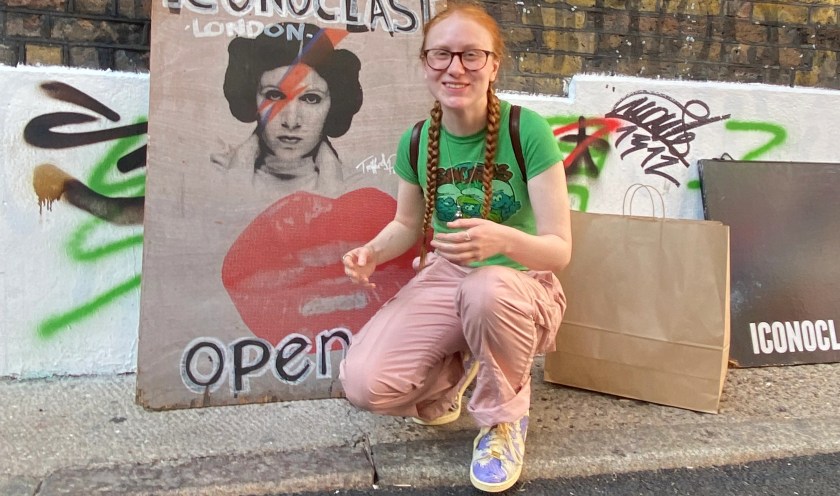
Me dressed as the fear of losing my mind

I think many people with experience of mental health issues, or big emotions, can relate to the feeling that it’s never going to get better. In times of depression, grief, and heartache our ability to truly envision a future and see the fullness of life becomes warped. It’s a terrible phenomenon that unfortunately has taken many lives. I’ve experienced it myself many times and it is terrifying. But the feeling of going crazy, the fear of it, is something different for me. In intense moments it takes the same inability to see things getting changing and redirects them towards a feeling of a loss of self and loss of reality.

As a mentally ill person, despite owning the idea of being ‘mad’ with great pride, I feel I am constantly running from the idea of being seen as crazy. Which is almost certainly related to the stigma around certain symptoms – namely the less pretty ones, mania, psychosis, irritability, flight of ideas etc; the stigma around the idea of being ‘crazy’. My mental health difficulties are a huge part of my identity – by my own choosing – and yet I still feel a need to mask how they really are lest I lose control over the narrative of my own mental illness. So that’s a part of this fear, it’s not really a fear of losing my mind, but a fear of being seen as crazy and losing autonomy and connection because of it. A deep fear of being misunderstood and unseen.

Yet the real, gnawing fear for me is internal. It is a fear that one day I will become irreversibly changed; I will lose all knowledge of our shared reality and slip entirely into a different one; I will enter an episode and never come out; I will lose myself. It’s ridiculous really, because we are constantly irreversibly changed, and our idea of self is constantly changing. Most likely the fear is rooted in internalised ableism compounded by my experiences of madness.

As Carrie Fisher once said ‘once you’ve lost your mind you don’t know it’s missing’ (that wording may not be right, but that’s the gist). So really the end result that I’m so scared of would actually just be a different way of being. Nothing inherently better or worse about it for me. So what am I really afraid of? Other people’s judgments. A lack of autonomy and care. And perhaps ‘going crazy’ and then reemerging, as would most likely happen in all the scenarios I imagine. Because I have actually lost myself before – when I was drinking I lost sight of who I was. That process of reemerging is deeply, deeply painful so maybe that’s what I’m afraid of. And finally, when I am not in the intense whirlwind of feeling like I’m going crazy, I think what I fear the most is being in that whirlwind again.

Let me attempt to illustrate why the whirlwind is so terrifying. You see, in that place I am two versions of myself at the same time – trapped in a paradox being ripped apart with searing force. One version of myself is the whirlwind. It is the tornado, screaming and tearing through life. The other version of myself stands in the eye of the storm, trying to avoid its path, screaming pointlessly into the spiral to remember who we really are while losing touch with who I am at the same time. Mostly all I can hear is the version that becomes the tornado, but there comes these background thoughts, senses and moments where the version of myself that sees life more clearly breaks through. 

And really it is the background knowledge that something is not right, that there will be consequences, that I am hurting – it is that reminder of who I am that makes me so afraid and so hurt. I know somehow that something is wrong, but I can’t stop it. This paradox creates the fear of going crazy, because I’m trying to figure out what’s real, trying to be less angry, trying to do the right thing and still getting it wrong. The moments when the whirlwind drowns out all sense of self are actually more peaceful, in a strange way.

It’s really a pointless fear. I can do all I can to protect myself and those around me and nothing more. The idea of being judged is useless to me; the internal ableism is something for me to face. But still this fear raises its head every now and then. This year at drama school I became convinced I was ‘disappeared’ – not that I had disappeared, that I was disappeared. I was so far away from myself and yet able to drift through my life and I feared that it would be that way forever. It wasn’t. Most things don’t last forever and that is wonderful. Essentially, if you’re a mentally ill person who shares this fear – hi, you’re not alone! And if you’re not and this sounds to you like I’ve already gone crazy, who knows – our realities are only relative anyway. I choose to set free this fear today and face my future with love and action instead. Sending love and support to you all today xxx

Posted in Advocacy, Mental Health

I Don’t Know What To Do

I sometimes call myself a mental health advocate. I’d like to say I am one, but sometimes I feel like I’m not. Because I don’t know what to do. 

We need more awareness, yes, but actual awareness, critical awareness of how we form our views of mental health and the intersectionality of societal issues. I can – to a point – help raise awareness, and I try to. But if I’m honest it feels a bit useless sometimes. I honestly have no idea how to make tangible change. Of course we can write letters and go to protests – but in the current political atmosphere I wonder if it’s doing anything at all; it’s hard to watch the government become what I genuinely believe is more and more fascist and not know a way forward. Then of course we can also make art, have conversations, create peer connections and connect with nature. This is generally what I focus on because it seems achievable, and I really do believe small changes build up and matter greatly. But underneath it all I am at a loss. 

Why am I telling you this? Because I think a lot of us feel helpless. And because I want to explain why I don’t share more actions to take – because I don’t know what actions to take. It’s something I want to focus on more, and I think maybe a good place to start is by sharing openly that I don’t know what to do. It’s easy for us to sit back and do nothing simply because we are unsure of what to do, or because we are afraid. The sense of hopelessness or helplessness is perhaps one of the most pernicious ills we have learnt; it separates us and takes away our power even further. Of course it’s understandable. How the hell do we stop climate change when the overwhelming majority of emissions come from huge corporations? How do we reform the mental health system when most people are unaware of its issues and the bodies in charge aren’t listening? I don’t know. But I think maybe, just maybe, it might start with people working to build communities again; to build connections again. 

I’m an 18 year old who can barely keep their own head above water some days. But I want to help. I want to connect and be a part of change. I want to listen and learn and build. I’m sure in the future I will think differently about some of the things I’ve already said and written; I’m sure I have and will get things wrong, even cause harm through mistakes. And you know what? That’s ok. Because fear of getting it wrong, of being helpless or not having a voice, are not worth staying silent. All we can do is do the best we know how to at the time and stay open to learning.

I don’t know how to begin to face the systematic issues with mental health treatment. I don’t know how to involve everyone in the conversation, how to raise my own voice without speaking over others. I don’t know if there should be no psychiatry at all (because it is absolutely a harmful system), or reform it, or if it is even possible to reform. I don’t know how we can use language differently and how it might help. I don’t know! But I want to find out. I want to listen to all the voices, I want to learn and I want to have a go. Yeah, we’ll probably get things wrong. But we have to try, right? 

If you have any resources, readings, ideas or anything else you’d like to share to help me (and others) grow in our action, please share them in the comments or via the contact page. 

Sending love and support to you all today xxx

Posted in Mental Health

Songs for my Bipolar Experience

Music is a really important tool in how I connect to the world; I have music or a podcast playing nearly all the time for sensory reasons. Like with all creative arts, music can help us connect to others, express our experiences, and change or reflect our moods. There are some things about my experience that I feel communicated in songs more deeply than I ever good in words of my own. 

So today I thought I’d share a playlist of sorts with songs that I feel connect with parts of my experience with bipolar disorder. They may be helpful in understanding what it’s like for someone else, or yourself, but they’re also really great songs so I would recommend giving them a listen! But obviously music can be quite powerful in how it makes us feel, so please use your own discretion. Let me know what you think of them in the comments below, and if you relate with any yourselves.

  1. Control by Halsey 

Captures that feeling of dangerous energy that comes along with my experience; the desire and lack of control 

  1. Piano Sonata No.14 in C# minor, Op.27 No.2, Moonlight – Presto (aka. Moonlight Sonata Movement 3)

My favourite version is played by Daniel Barenboim, I think he really conveys the emotion of the music. Such a beautiful piece of music that encapsulates the feeling of (hypo)mania for me, the energy and beauty and pain – I can find all of it in this piece 

  1. Light of Love by Florence and The Machine 

This song resonates with a sense of healing for me, and gives me the power to keep going sometimes. It helps remind me that I am still me inside

  1. The Sounds of Silence by Simon and Garfunkel 

I know it’s become a bit of a meme song but the lyrics and harmonies of this song are truly amazing. I find it resonates with my experience of depression, especially the feeling of slipping back there again 

  1. A Reason to Fight by Disturbed 

I mean the title says it all really. A powerful message of support and willing to stay and fight when it all gets too much 

  1. Both Sides Now by Joni Mitchell 

In my opinion one of the best songs ever written. It has so much love, care, and growth in it and resonates with me differently every time I hear it. It reminds me of how I feel I change and grow through each episode, and the wholeness and seasons of life 

  1. I Miss the Mountains from Next to Normal 

This musical is about a family where the mother has bipolar disorder and this song captures a sentiment I don’t hear talked about very often – that you can actually wish to go back to a time when it was worse. There’s a certain numbness and difficulty in adjusting to being ‘ok’ and a grief of life not lived, and this song really holds that message in a gentle way 

  1. Girl Anachronism by The Dresden Dolls 

This song represents so much of the feelings of (hypo)mania for me, and what that itchy energy is like, not only at the time but also how the illness as a whole makes you feel set apart from the rest of the world sometimes; how it is a huge part of our lives and our identities

  1. A Safe Place to Land by Sara Bareilles 

This song is comforting to me in a lot of situations, especially when I’m overwhelmed or hopeless. It’s full of support and helps me feel held; like it can get better again. It reminds me I’m not alone

  1. listen before i go by Billie Eilish 

Really encapsulates a feeling of hopelessness in depression 

  1. She Used to Be Mine from Waitress 

This song has been so immensely important to me on my journey, especially with addiction recovery (something a lot of people with bipolar struggle with). It holds both grief for who we used to be and a desire to fight and become who we can be. I just love it. 

  1. Quiet from Matilda The Musical 

Again this really carries the sense of what it is like in my brain when mania starts to kick in, thoughts flowing from one to the next so quickly and loudly and how that can bring such anger. But also the calm end to the song captures a part of my experience I can’t even explain but is so very very real, and almost beautiful 

  1. Everybody Hurts by R.E.M

Comforting and well known, I listened to this song on repeat as I was dragging myself out of one of my first depressive episodes 

  1. Sky Full of Song by Florence + the Machine 

Somehow carries a sense of both depression and mania for me – the exhaustion from going and going, pretending to be ok, not knowing you’re not etc etc. It is a song of pause and reconnection to myself 

  1. Hallelujah by Jeff Buckley 

Obviously there are many other versions of this song but the feeling this version gives me is unrivalled. It mirrors that desperation of that desperation in depression for me, without actually making me feel depressed listening to it 

  1. Clown by Emeli Sandé

Feel like it spans a lot of different experiences in life and trying to reckon with them, but for me it also helps process the difficult feelings that come with facing the consequences of things that have happened/ you’ve done in an episode (or in addiction)

If you liked this post, please let me know as I have many other songs that resonate with different parts of my experience and I love sharing them! Sending love and support as always xxx

Posted in Advocacy, Mental Health

Why Do We Pathologize Pain?

We’ve come to pathologize emotional pain and human distress. That’s to say, we’ve come to medicalise it – give it labels that make it into a medical problem. And of course this serves a purpose in our society and our systems; I personally am hugely grateful for my mental health diagnoses because they help me understand myself and how I view the world. But the term ‘pathologizing’ goes beyond just medicalising emotions. It defines the problem that ensues from medicalising our emotions. 

According to the Cambridge dictionary, pathologizing means: ‘the act of unfairly or wrongly considering something or someone as the problem, especially a medical problem’. This is something we see in mental health spaces all the time, with very little awareness of it. The way we discuss mental illness is so often through an individual lens. We ignore how the modern world’s expectations affect what we see as disordered – for example a huge criteria for mental illness diagnosis is a lack of productivity. But productivity is defined by societal norms and expectations. We label someone as depressed, saying they have a chemical imbalance while ignoring the fact that they are living in poverty and perhaps if they weren’t their mental health would look very different. At best we say that these external factors are simply contributors and not an essential part of our human experience; we ignore how we define was is disordered or not entirely. 

There’s a million problems with this. It prevents us from trying to build a better world in a more informed way. It isolates sufferers and prevents them from getting the kind of care – like housing, community, less workload – that they actually need. I could go on and on about this (and I do quite often!) but today I want to answer the question – why do we do this?

Well pathologization stems in many ways from medicalisation. I think there’s benefits and issues within this itself, but it’s understandable why we do this. By giving clear criteria for diagnosis in a medical format it would seem we can more easily start a larger number of people getting treatment. Unfortunately this isn’t the case, but in theory this would seem to make that easier. It also allows us to have some kind of framework to understand ourselves and more easily find others who may have a similar experience – it has certainly helped me with this! And in theory it would help others have a doorway to understanding people with a mental illness by looking at it through a medical lens, so they would know how to start approaching the problem. Furthermore it also gives a structure for how we can syphon off funding for mental health care by making it a wholly medical service. All logical and on the surface optimistic reasons to medicalise emotional pain. 

But soon we see the problems come in such as trying to ‘fix’ people to medical standards too rather than to their own standards. We start seeing people as the medical problems rather than as people with diverse experiences. We try to fit people into one route for fixing the issue because that’s easier. Medical problems need medical solutions right? Medication and hospitalisation rather than community and economic support. We see them as scores and issues. And soon we are pathologizing them. The individuals become the problem they present with, and when the one-size-fits-all treatment doesn’t work, we assume it must be the individual’s fault. 

Maybe it’s just a natural progression from medicalisation then? But maybe it’s also a symptom of the way our western society functions as a whole. We are not exactly encouraged to see ourselves in the context of the world around us. We’re told we are individuals and isolated in many ways – so it would make sense that we see our problems as individual problems that need isolated solutions. So simply because of the way we have learned to exist in the world we don’t think to see our emotional distress as interconnected. 

Then of course, as already mentioned, we live in a society driven by productivity at ever increasing speeds. We have an intolerance for difference, for people who need different support or cannot fit themselves into the world’s expectations of them. So we need to label them as disordered rather than face the idea that the way the systems are running isn’t working. It negates society’s responsibility to change and accommodate. But the thing is as the world gets faster, the economy gets worse, pressures get bigger, more and more people are finding themselves with mental health issues. Do you really think this is a coincidence? The world is becoming more and more incompatible with human rhythms of nature, so more people are finding themselves in distress. But also if the expectations shift to demand more of us or different things from us, then whatever behaviour doesn’t fit those expectations ends up being labelled as disordered. 

And maybe it’s fear – we don’t want to face that we share emotions with someone with schizophrenia or bipolar. We don’t want to admit we relate to an autistic person, or can kind of see the sense in what that psychotic person is saying. We are scared that the difference lives in us too, maybe? And again – we have not learnt the skills to be able to conceptualise how others may live differently to us through their perceptions of the world. We have not learnt tolerance, nor we have not learnt to question the status quo – because it would threaten the status quo. 

I think we pathologize pain because it’s the easiest thing to do when everything else seems so overwhelming. But we can begin to change this simply by opening ourselves to compassion; opening ourselves to a different narrative. We are all human and we are allowed to have deeply painful, wonderful, beautiful human experiences. That means sobbing our eyes out or seeing shadows no one else can. Feeling does not make us the problem. 

Hopefully that made some kind of sense, my little brain ramblings on the internet. Sending so much love and support xxx

Posted in Managing Mental Health, Mental Health

Nature and Mental Health

I think the connection between nature and mental health is under-utilised. 

There are hundreds of studies out there looking at the proven positive effect time in and connection with nature has on our mental health, but I’ll be talking from a more holistic/ theorised place today. 

I think we have learnt to see ourselves as separate from nature, but the truth is we are part of nature. We breathe the same air as all animals, given to us by trees and plants. We are connected to the same ground as all flowers and vegetables, all fruits and roots. We are nature. We’re nature with opposable thumbs. So of course climate change affects us – not only on an intellectually anxious level, but a deep intrinsically natural level. Of course a sunset or a flight of birds can inspire us on an instinctual level. We don’t need to completely understand it, define it – of course at a scientific level that’s useful. But on an emotional level? I think just leaning into that connection can help set us free. 

The pace of the world we live in is in direct juxtaposition to nature. In the western world at least we run at what I think is an unattainable pace. The capitalistic society is intent on promoting not only individualism but also productivity. And we’ve learnt that productivity is a good word. The model citizen is a productive citizen – this really means blindly following the rules put upon us and always striving for more, at a faster rate. Not only does this harm us individually, but it is a driving cause behind the industries that are contributing most to climate change and destroying the nature we are so deeply connected with. So we are severed from the nature we are a part of, and told to keep busy enough that we never question the system we have become a part of; perhaps more importantly, in order to have the resources to survive we cannot question. We are placed in a deep survival mode, and often forced to be unaware of it. 

The next logical step would be to assume that a person with a mental health issue is individually at fault. A weakness in the mind, a personal problem. It isolates the sufferer further and gives the rest of the world and excuse to keep going as is. The common narrative surrounding mental health awareness continues to ignore, on the whole, how much societal and economic factors are contributors and causes of mental illness – and by extension how a lack of connection with our roots in nature is a contributing factor. It should be made clear I am not advocating for full blown communism or anarchism or anything like that – it’s not like we haven’t seen ample issues when those structures have tried to be deployed in the past! In fact I have very little idea how to face these issues on a wider scale. But I know how to face them on a smaller scale; I know where to start (I think) and maybe that’s enough for now. To start, perhaps we look to the pace of nature; to the connection we inherently have (but so often ignore) with nature and our fellow beings. 

Nature does not rush. It works at exactly the pace it needs to. In fact time itself is a structure we have projected onto the world to help us make sense of it – with very obvious reasons for helping us level our experience with each other. But what the construction of time can tell us is that though we may share hours between us, we can redesign what the contents of an hour should be. To explain: resting for an hour in the grass can be redefined to be just as important as furiously analysing stocks to meet a deadline. We can redefine what productivity means and looks like. Nature rests in winter – its pace changes to match the weather and the temperature, the presence of bees and hibernation of bears. And nature still survives. So by extension, perhaps we can learn to respect our rhythms. To work with the sun, to respect the rain, to rest when we are tired and flow when we are not. We are not machines – we do not have endless energy or an ability to always be running. We are not all designed to sleep and wake at exactly the same times each day. We are nature. Maybe we can learn from it. 

Then of course there is the simple benefit of being among other nature. As mentioned countless studies – and poems and songs and personal experiences in each of our lives – record the boost to our mental health when among nature. Simply taking time to sit under a tree and imagine our own roots connecting, or take a walk in the woods (if that’s possible – everyone should have access to green spaces), or swim in a lake, run through a field, watch the flowers in the breeze or the sea crash to shore. Simply taking the time, even if it is only a minute, to start learning how to just be again – alongside our nature – can have a huge positive impact. It can calm us, make us feel more connected, happier, lighter. 

Oh and by the way, this isn’t new or revolutionary. It’s been strategically forgotten and hidden. Native communities around the world have known this for such a long time; the colonial view of society and mental health has detached us from this. I’m not at all the person to be listening to on this perspective and this history  – but here’s just one article written by Indigenous writer Edson Krenak Naknanuk from Brazil about connection with nature: https://www.culturalsurvival.org/publications/cultural-survival-quarterly/indigenous-peoples-are-essential-rights-nature

As the article explores, a view to see nature as a part of us – something in a reciprocal relationship – is important when looking to solving climate change too. 

Remember – we all breathe the same air; we share a consciousness of being through nature. So why do we seek to intellectualise that connection always? How does that separate us from our connection with freedom of mental health? How can nature support us mentally, as a community and individuals?

Sending so much love and support to you all today xx

P.S. For a related science look at some of these topics I would recommend the book ‘Beyond Biocentrism’ by Robert Lanza and Bob Berman